
NYMF 2012: Review Roundup Week 2

The New York Musical Theater Festival closed its 2012 season on Sunday. The next day, NYMF announced the winners of its 2012 awards, as voted by the NYMF jury. This year’s NYMF Jury included: Dan Bacalzo (Theater Mania), Dale Berke (NYMF), Donna Lynne Champlin (actor), Michael Dale (Broadway World), Ken Davenport (producer), Linda D’Onofrio (NYMF), Jason Eagan (Ars Nova), Frank Evans (BMI), Lily Fan (producer), Peter Filichia (Star-Ledger), Erik Haagensen (BackStage), Lily Hung (NYU), Tim Jerome (NMTN), Matthew Murray (Talkin’ Broadway), Tamara Tunie (actor-producer), and Keith Varney (writer-actor).

Michael Ogborn garnered two jury awards for Baby Case (Excellence in Music, Excellence in Lyrics), while Jeremy Dobrish picked up Excellence in Direction, and the show won the “Best of Fest” Audience Prize. The jury awarded Most Promising Musical to A Letter to Harvey Milk, which also earned Excellence in Book for Jerry James, Excellence in Lyrics for Ellen M. Schwartz (in a tie with Michael Ogborn), and Outstanding Individual Performance nods to Jeff Keller and Leslie Kritzer.

Jerry Rapp received Excellence in Choreography for Prison Dancer, which also garnered praise for its Outstanding Ensemble, and Outstanding Individual Performance of Jeigh Madjus. Excellence in Design went to Kendra Bell and Aaron Sherkow for Le Cabaret Grimm, Outstanding Orchestration to Stephen Ferri, Andrew Fox, and Adam Michael Kaufman for Foreverman, and the Theater for the American Musical Prize went to Stuck.

Other Outstanding Individual Performances went to Enrique Acevedo (Zapata!), Jessica Burrows (Himself and Nora), Tom Deckman (Arnie the Doughnut), Michelle Federer (How Deep Is the Ocean?), Ryan Kelly (Living with Henry), Jillian Louis and Kevin B. McGlynn (Flambé Dreams), Stacey Seargent (Central Avenue Breakdown), Haley Selmon (Le Cabaret Grimm), Graham Skipper (Re-Animator), and Morgan Weed (Swing State). The Daegu Production Award and New World Stages Development Prize will be announced in the coming weeks.

Below are selections of what some theater bloggers have been saying about the second half of the festival’s offerings, as well as belated notices for Arnie the Doughnut.

Arnie the Doughnut: Frances Limoncelli (book), George Howe (lyrics, music)
A bouncy and cheery enterprise that otherwise adds up to nothing more than a well-executed but problematic piece of children’s theater. … The show, with its perky tone and cartoon-like characters typical of children’s theater, never conjures up enough sense of magic to transcend the basic lack of logic in the narrative. A doughnut does not seem to be a good candidate for anthropomorphic qualities. Nevertheless, the lively music and lyrics by George Howe … kept the kids in the audience quiet for some 75 minutes. (http://www.backstage.com)

It may be a cop-out to describe Arnie the Doughnut as sweet ­… but that’s just what Frances Limoncelli (book) and George Howe (music and lyrics) have delivered. … It would be nice to also report that the show is nutritious, dramatically engaging, or even particularly original … but even running only 75 minutes the show feels long. … Another draft or two, better focusing on the central relationship, would seem a good idea to roll it into proper TheatreworksUSA shape. But if all you want is a simple chocolate-covered, sprinkle-kissed romp for the family, Arnie the Doughnut hits the spot. (http://www.talkinbroadway.com)

Central Avenue Breakdown: Kevin Ray (book, lyrics, music), Andrea Lepcio (book)
The encore production of Central Avenue Breakdown at this year’s New York Musical Theatre Festival sizzles. … Not only does this musical have soul, it also has a story with heart. … Central Avenue Breakdown has legs. This is the one piece I’ve seen at the festival this year that is near clean enough to pick up and move to a commercial run. (http://theandygram.com)

It is easy to see why the festival invited Central Avenue Breakdown, which was part of the 2011 lineup, to return. The show … is rich with lively, moving and often truly original music by Kevin Ray. … But the book, by Mr. Ray and Andrea Lepcio (with additional story contributions by Suellen Vance), needs major work. … Still, Central Avenue Breakdown manages a touching finale. … The strong parts of this show deserve to go on. (http://artsbeat.blogs.nytimes.com)

The show has come back to NYMF in a big way, vastly improved in all of its ingredients and perfectly scaled to its new venue. Under the same director-choreographer, Christopher Windom, the show now dazzles. His dance numbers newly pop, in large part thanks to an extremely agile sextet of dancers. The new co–book writer (with composer Ray), Andrea Lepcio, has helped to clarify and streamline the once-muddy story line. (http://www.backstage.com)

Foreverman: Brett Boles (book, lyrics, music)

This is the most ambitious work I have seen at the festival this season. Foreverman has an interesting idea and a workable framework in place. It has a melodic score with lovely orchestrations by Stephen Ferri, Andrew Fox, and Adam Michael Kaufman. Foreverman has real potential and good bones. … Congratulations to this team on a job well done. (http://theandygram.com)

Foreverman, which begins as a gothic mystery, soon devolves into a mash-up. … Bowles touches on provocative themes. … Unfortunately, these are slathered over an unemotional enterprise. Bowles’ music is harmless, with occasional distinct harmonies. His lyrics are less diffuse than his book. … A comic duet between Hawkins and Morgan is a relief from all the confusing doom and gloom, but it’s not enough to bring life to this tale of death thwarted. (http://www.backstage.com)

1-1/2 out of 4 stars. Fans of Frank Wildhorn should rush to catch Foreverman. … Unfortunately, Boles is akin to Wildhorn in spirit and deed. His book takes forever to get going and continually must stop and explain itself. Plot twists are downright silly. … And most damning of all, the songs are filled with tepid lyrics that all the passion in the world can’t ignite. … Despite this, the cast commits themselves wholly to the project with admirable passion. … The cast don’t have songs and story more worthy of their talent. (http://www.huffingtonpost.com)

The Groove Factory: David James Boyd (book, lyrics, music), Chad Kessler (book)
If you have an unquenchable appetite for the disco beat and are into the fun side of hard drugs and grotesque drag, there may be moments where your fancy is tickled, but for the most part this New York Musical Theatre Festival entry is a hard show to embrace. … There’s plenty of routine disco-infused choreography by Buddy Casimano and costume glitter by David Withrow. What’s in short supply are charm and taste. Sometimes the lack seems deliberate. Maybe that’s in sync with the disco era, but a little wouldn’t hurt. (http://www.backstage.com)

Rock of Ages meets Valley of the Dolls meets television test pattern, it purports to warn of the excesses of consumption and ambition that drove life at the end of the last millennium, but does so without the slightest bit of care, class, or crispness. … The only memorable thing about the musical numbers is their incessant beat. … This is a drawling, droning music video that may as well be sung in a foreign language for all it has to say about the screwed-up ways we pursue ourselves today. (http://www.talkinbroadway.com)

Le Cabaret Grimm: Jason Slavick (book, lyrics), Cassandra Marsh (music)
There are some beguiling things about the show. … Cassandra Marsh’s traditional-sounding music boasts several piquant melodies, and it sometimes attains sumptuousness in the playing of the three-piece band, with Marsh as music director at the piano. Slavick’s lyrics have some funny if obvious stuff. … Most impressive are the puppets and masks, which more than anything else supply a dollop of fairy-tale magic. … Still, the overall impact of the show is blunted by Slavick’s weak concoction of a book. (http://www.backstage.com)

Of all the entries in this year’s New York Musical Theatre Festival, Le Cabaret Grimm … is surely the most stylish … a visual dazzler, transforming from sultry and surly to homey and warm or even bitterly comic within seconds, all without breaking a sweat or varying its stride. … The biggest letdown is the music, which wallows more than it should in unadventurous emphatic piano riffs rather than in the more playful melodies the material demands. (http://www.talkinbroadway.com)

A Letter to Harvey Milk: Jerry James (book), Ellen M. Stewart (lyrics), Laura I. Kramer (music)

If it weren’t for the quietly truthful, mercifully understated performances of Jeff Keller and Leslie Kritzer, which cut confidently through all the goo, Milk would curdle completely. … As there’s very little dramatic action inherent in such a scenario, the authors try to compensate with a surfeit of backstory about both characters, which only emphasizes the stasis. … Indeed, Kramer’s score is mostly uninspired pastiche, and Schwartz’s sing-song lyrics are dotted with rhymes visible a mile off and filled with generic and cloying locutions. … It’s telling that the climactic moment is not musicalized. It should have been. (http://www.backstage.com)

2-1/2 out of 4 stars. The heart of the show is the warm friendship that develops between Barbara the teacher and Harry the butcher. Leslie Kritzer is very good as Barbara and has a powerhouse voice to match. Even better is Jeff Keller as Harry. … The central problem is the looming presence of the Holocaust, which feels too weighty a matter for such a low-key musical like this. … When the show stays in the low-key vein that suits it, the songs often soar and any show would be glad to have two leads as solid and effective as Keller and Kritzer. (http://www.huffingtonpost.com)

Leslie Kritzer ensures no show she’s in ever feels too small, but even her skyscraper-size talents are challenged by A Letter to Harvey Milk. … James’s book covers an enormously compelling story in the central pseudo-love triangle, and never fully falters in examining it, but overall musical ambition is scant. Although Kramer’s tunes are catchy and often heartfelt, and Schwartz’s lyrics, if seldom ground-breaking, do the job, much of the drama resists singing. (http://www.talkinbroadway.com)

Living with Henry: Christopher Wilson (book, lyrics, music)
Living with Henry … has settled on a fresh narrative perspective for his post-apocalyptic AIDS crisis musical. … Sadly, this is a musical in search of a director. … In general the songs serve the piece well in developing character and advancing the plot. Unfortunately, they have been so poorly staged that I find myself wondering what the piece could actually be were it given a less convoluted production. (http://theandygram.com)

Wilson and director-choreographer Donna Marie Baratta make their potentially eye-rolling conceit work by never taking it for granted or treating it comedically. … Unfortunately, it does not impress as something that could be scaled up without crushing its intimate charms. … It’s nice throughout, but not profound or world-changing. One hopes that Wilson, Baratta, and interested producers realize that that is, or at least should be, okay. (http://www.talkinbroadway.com)

Prison Dancer: Romeo Candido (book, lyrics, music), Carmen Dejesus (book)
This buoyant evening … avoids mushy sentimentality and liberal guilt in dealing with a bunch of hardened criminals who learn about love and community through dance. … Romeo Candido’s disco-inspired score is beautifully wed to his lyrics and to his and Carmen De Jesus’ book. Under the vibrant work of director-choreographer Jenn Rapp, everyone is a distinct character. … Despite the characters’ sordid backgrounds, we end up caring what happens to them. Yes, they’re criminals, but they’re also human and as such not beyond saving. (http://www.backstage.com)

Like many shows of this nature, its execution is nowhere near as good as its intentions. … The biggest problem is that the writers have not settled on whether this is supposed to be Christian’s or Lola’s story, and that indecision makes the evening one of chaotic imbalance. … As messy and unfocused as the evening is, however, there’s a daring and moving musical in it somewhere just clawing to get out. … That would mean some heavy-duty rewriting (and likely cutting) to bring the bloated piece into tight, taut line. (http://www.talkinbroadway.com)

Shelter: Brittany Bullen (book, lyrics, music), Newell Bullen (music)

Twenty minutes into Shelter the cast breaks into a hymnlike song called “Noah’s Prayer,” and the musical finally takes off and soars. Then it sinks back into the well-meaning but clunky piece we hoped we’d escaped. … It’s frustrating because when Shelter is occasionally aloft we get a glimpse of the stirring, socially aware musical that its creators intended. … Brittany Bullen’s book is meant to draw attention to the plight of women and families who wind up in homeless shelters, and that’s admirable. But doing so obliges her to depict all the various types of people and situations one might find in a shelter rather than restricting her story to actions growing out of conflicts between characters. (http://www.backstage.com)

It is, indeed, a musical about life inside a battered women’s home, and is loaded with all the clichés, limitations, and heartfelt sense of doing the right thing you’d expect. … I’m disinclined to take it too much to task for its arid, predictable book. … I’d rather discuss Shelter’s one true surprise: its arrangements. Clark Bullen has worked wonders on the ruthlessly average songs. … It can’t be easy to plumb the gutter for society’s most lamentable castoffs and find some way to make them soar in spite of that – yet that is just what the Bullens have movingly and miraculously done. (http://www.talkinbroadway.com)

Stand Tall: Lee Wyatt-Buchan (book, lyrics), Aldie & Sandy Chalmers (music)
The campiness quotient should be high, but Stand Tall takes itself surprisingly seriously, attempting to convey important messages about bullying and self-confidence. This conflict between content and tone is especially obvious in Welnicki and Shackner’s performances, which are earnest to the point of naiveté. … The songs are almost uniformly repetitive, both harmonically and lyrically. It might pass on the radio, but it’s a striking blow here. (http://www.backstage.com)

1-1/2 out of 4 stars. It starts with the solid song “Find Us a King” and ends with another one, the title tune “Stand Tall,” both rousingly performed by a talented cast. In between we have a very weak book and a few decent tunes that can’t wipe out the tired jokes and plodding action that constitutes the show. …The dreadful book … needs to be entirely rewritten. It’s a pity because when they put their minds to it, Lee Wyatt-Buchan and Sandy & Aldie Chalmers can deliver some very strong tunes. … I have faith that with diligence and hard work that the team that delivered the handful of strong tunes sprinkled throughout is capable of much better. (http://www.huffingtonpost.com)

This version gives new meaning to the biblical David and Golilath and reduces it to what the teenie bopper crowd would probably relate to best. … This is all a lot of silly fun, with occasional laugh lines thrown into this rock musical. The actors play a lot of tongue-in-cheek and sometimes when not, should be. Along with some really loud rock guitar, there are some top voices and songs. (http://www.examiner.com)

Swing State: Dana Yeaton (book, lyrics), Andy Mitton (music)
Swing State is an odd little show. It’s a two-person, boy-meets-girl musical, except the boy is gay. It has a flip, political-sounding title, but the story is not a farce about elections but instead a drama about personal loss and childhood trauma. It’s a musical about tolerance, but chiefly emphasizes tolerance of those who are openly intolerant. … In its painstaking efforts not to judge the Christian right, somehow the show places the onus to embrace “the other” disproportionately on Neil, and Bonnie mostly gets a free pass for her bigotry. (http://artsbeat.blogs.nytimes.com)

Not everything sings. Certainly not Swing State. … The characters are too thin, their wants are too small, and the story is seriously unpersuasive, despite the talented ministrations of actors Jed Resnick and Morgan Weed. … A two-character musical is a difficult thing to structure, and Yeaton isn’t up to it, awkwardly ping-ponging back and forth between Neil and Bonnie and jury-rigging reasons to bring them together. … There are some not-unattractive melodies, but it seems more determined than inspired – which pretty much sums up the specious Swing State itself. (http://www.backstage.com)

1-1/2 out of 4 stars. Here’s a rather confused two-hander that benefits greatly from the personable leads who perform it. … Unfortunately, the tone of the show is never quite established. Far and away the best song is the wickedly funny tune Bonnie sings when she’s reading a picture book to her students about the evils of abortion. But overall, the tone is more gentle and timid. … It would be more interesting if Bonnie weren’t such a cartoon and Neil so tepid. (http://www.huffingtonpost.com)

Zapata!: Peter Edwards (book, lyrics, music), Ana Edwards (book)
Most of the important elements are in place for Zapata!, a promising and highly original musical. … Edwards’ songs are mostly captivating. … But the biggest problem with this show is the book, which Edwards wrote with his wife, Ana. Instead of just concentrating on the compelling story of Zapata, “the elegant Indian,” the Edwardses have grafted on to it a contemporary twist. … We don’t need to be hit on the head. The Wall Street protest finale, “We Fight for What We Love,” is especially needless and cringe-worthy. … It’s all fixable with a bit of rethinking before the next step in the process. (http://www.backstage.com)

Authors Peter and Ana Edwards … undercut an otherwise persuasive personal history by insisting on their argument too strongly. … It’s never clear what, beyond the simplest moral (“fight for what you love, not against what you hate”) the takeaway is, or how it directly relates to the present day. … The audience might have an easier time if the Occupy frame were either downplayed or dropped altogether. It’s admirable to want to show how these sorts of movements have intertwined and informed each other throughout history, but this one provides confusion rather than clarity. (http://www.talkinbroadway.com)
Posted in Festivals, Shows | Tagged , , , , , , , , , , , , , , , , , , , , , , , , , , , , , | Leave a comment

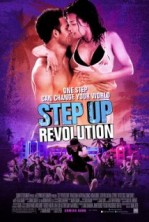
Step Up Revolution: Review Roundup

This past weekend, Summit Entertainment released Step Up Revolution, previously known as Step Up 4: Miami Heat, the latest in this dance-film series, to mixed though somewhat negative-leaning reviews. The creative team includes Scott Speer (direction), Amanda Brody (screenplay), Karsten Gopinath (cinematography), Carlos A. Menéndez (sets), Rebecca Hofherr (costumes),  and Chuck Maldonado, Christopher Scott, Jamal Sims, and Travis Wall (choreography). The cast includes Ryan Guzman, Kathryn McCormick, and Cleopatra Coleman, with Stephen Boss, Tommy Dewey, Peter Gallagher, Misha Gabriel, Mia Michaels, and Megan Boone. Rated PG-13.

Neil Genzlinger (N.Y. Times): It’s amazing that the dancers in Step Up Revolution can move so well through all that cheese. Yes, the fourth Step Up movie has arrived, and of course it’s full of invigorating dance numbers that are made all the more entertaining by the 3-D technology. Alas, the dancers have to stop sometimes to allow the utterly unoriginal story to be told, and the romance at the center of it inspired Amanda Brody, the screenwriter, to produce dialogue so cheesy as to be laughable. … But no one goes to a Step Up movie for the plot or the romance. Only the dancing matters here.

Mick LaSalle (S.F. Gate): Here is the fourth installment of a series that no one exactly takes seriously, with a script that was probably written in crayon, and yet nobody onscreen seems willing to admit that they’re in anything less than West Side Story. … Every practical, tangible thing about this film is ghastly. … The dances are long, and aside from McCormick and Guzman’s duets, the choreography is awful – mostly staccato gestures, acrobatics and men doing line dances, most of it filmed in short takes and accentuated by stop-action animation to make the dancers look even more mechanical. It’s all quite dumb, lousy and earnest, and yet not for one flicker of a second is it obnoxious. Look, these people are dancing for you. They’re trying. You don’t have to love it, but you can respect it.

Justin Lowe (Hollywood Reporter): While diehard fans and dance fanatics will respond in the opening frame, ongoing competition from superheroes and cute cartoon characters may slow momentum in subsequent weeks. … Scott Speer acquits himself adequately, particularly since the movie is more akin to a long-form video project. Playwright and first-time screenwriter Amanda Brody plays it safe, leaving the pyrotechnics to the choreography team and sticking to the franchise’s proven dance-romance formula, which offers few surprises but delivers effectively. … By now, however, 3-D dance performances are routine for the genre and with the exception of a few notable aerial tricks, Revolution doesn’t offer many stylistic innovations.

Roger Moore (Chicago Tribune): Step Up Revolution taps into the dance “flash mob” phenomenon and moves to Miami to give us the sunniest and most entertaining of these kids-gotta-dance musicals … brilliantly choreographed, well-shot and sharply edited treat. … But it’s not just the choreography that sells this over-familiar story. Speer peoples the screen with legions of jaw-droppingly gorgeous dancers, actors and extras – shaking what they’ve got in 3-D. … This under-scripted, super-sexy cinematic postcard is the one the tourist board should post on its website. Come to Miami. Bring your bikini. And your dancing shoes.

Mark Olsen (L.A. Times): Though the location-specific choreography looks like it could be impressive, the film’s frantic cutting style makes it difficult to simply enjoy bodies moving in space. … The film ends on a predictably triumphant note with vague platitudes of reconciliation and an offer to participate in a marketing campaign for a multinational campaign with a shaky labor-practice record. One perhaps does not expect a fully formed and cogent political platform from a Step Up film, but when a movie puts Revolution in the title and engages community action and social justice directly there should be more at the end than simply selling out to the first bidder.

Posted in Film, Shows | Tagged , , | Leave a comment

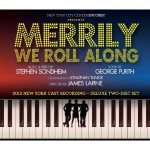
Merrily We Roll Along: Album Reviews

PS Classics has released the cast recording of this February’s Encores! concert version of Merrily We Roll Along, the musical adaptation of Kaufman and Hart’s 1934 play, to positive critical and popular reviews, landing atop the Billboard Cast Album Chart in its first week of release. This latest recording is the only one to include all the changes made since the show’s initial 1981 Broadway run, including the new songs “That Frank,” “Growing Up,” “Musical Husbands” and “The Blob.”

The creative team includes George Furth (book), James Lapine (adaptation), Stephen Sondheim (lyrics, music), Rob Berman (music direction), and Jonathan Tunick (orchestrations). The cast includes Lin-Manuel Miranda (Charley), Colin Donnell (Franklin), Celia Keenan-Bolger (Mary), Betsy Wolfe (Beth), Elizabeth Stanley (Gussie), Adam Grupper (Joe), and Zachary Unger (Frank Jr.).

Elysa Gardner (USA Today): Our pick of the week is “Old Friends,” featuring Colin Donnell, Celia Keenan-Bolger and Lin-Manuel Miranda. A new recording of Merrily We Roll Along features fresh orchestrations by longtime Stephen Sondheim collaborator Jonathan Tunick and, on this track, three noted talents serving the song’s sly wit and bittersweet warmth.

Andy Propst (Theater Mania): It’s tough not to fall in love with this superlatively produced disc from the moment that one hears Tunick’s revised overture … that stands proudly alongside such iconic musical theater openings as those found in Gypsy and Sweet Charity. … It’s not only Tunick’s new contributions that make this new album notable. There’s also the inclusion of copious amounts of dialogue, which make the experience of listening to the recording akin to seeing the piece unfold in the theater, and the flavorsome performances from the principals. … The set comes with a deluxe color booklet that features not only the standard lyrics and synopsis, but also a pair of essays, including one by Tunick about his work on the musical in its original as well as this new, and most likely definitive, incarnation.

Joe Stead (Chicago Stage Style): There may be better sung renditions of these songs available on other recordings, but I doubt any of them will give you the full scope or better appreciation of a minor masterpiece that PS Classics’ latest labor of love assuredly does. Just the swinging sound of Jonathan Tunick’s freshly updated orchestrations was enough to get my heart racing. … In the end, it is about friendships and redemptions, as Sean Patrick Flanhaven’s informed liner notes observe. The redemption of a musical flop into a hit is rare and exceedingly moving to witness. And Merrily We Roll Along has finally and fully earned that redemption.

Posted in Albums, Books & Media, Revival Stage Cast | Tagged , , , , , , | Leave a comment

Loverly: Book Reviews

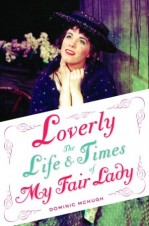
Oxford University Press recently released Loverly: The Life and Times of My Fair Lady to mixed but generally positive reviews. Using previously unpublished documents, author Dominic McHugh presents a new, behind-the-scenes look at the five-year creation of My Fair Lady. He charts the show from the aftermath of the premiere of George Bernard Shaw’s Pygmalion and the playwright’s persistent refusal to allow it to be made into a musical, through to the quarrel that led lyricist Alan Jay Lerner and composer Frederick Loewe to part ways halfway through writing the show, up to opening night and through to the present.

Gerald Bartell (Washington Post): Dominic McHugh, who lectures in music at the University of Sheffield, eschews gossip in his account and takes a scholarly tack in a book that originated as his doctoral dissertation at King’s College, London. He pores over hundreds of primary sources: letters, contracts, script outlines, score annotations and songs used, revised or discarded. And from these myriad documents he constructs a record of the show’s history that’s illuminating, perceptive and valuable, yet also inert and colorless. … McHugh’s work is painstaking, and at times that’s a problem. Thousands of facts weigh down the tale of what is, after all, a buoyant musical play.

Alan Gomberg (Talkin’ Broadway): This book probably will not especially appeal to those looking for a light read filled with tales of backstage and onstage intrigue and mishaps. Loverly is serious business. … Here and there are some mildly problematic statements on factual matters … but none detracts in any significant way from the overall accomplishment. Despite those reservations, there’s so much to recommend about this book that I feel a bit ungrateful to be carping, so I will close by emphasizing that Loverly’s strengths substantially outweigh its weaknesses. McHugh deserves our gratitude for the immense amount of new information he provides.

Michelle Jones (Dallas News): McHugh stresses that Frederick Loewe was a relentless editor. … The author could have used a similarly keen eye: Loverly reads like a dissertation in some places, and a degree in music would come in handy in others. Still, using published and unpublished scores, rehearsal notes, reams of correspondence and other archival materials, McHugh presents a revealing look at the intricacies of writing and staging the production. … Lerner and Loewe’s triumph, he says, was in transforming the complex play into genre-stretching musical theater – writing a classic Broadway musical without writing “standard types of Broadway songs.”

Posted in Books, Books & Media | Tagged , , , , | Leave a comment

The Mikado: Video Reviews

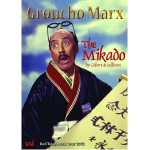
The TV cast audio recording of NBC’s Bell Telephone Hour production of The Mikado has been available since 1960, but this new DVD marks the first time the video recording has been available. For the record, the creative team includes William S. Gilbert (book, lyrics), Arthur Sullivan (music), Martyn Green (direction), and Donald Voorhees (music direction). The cast includes Stanley Holloway (Pooh-Bah), Dennis King (Mikado), Groucho Marx (Ko-Ko), Melinda Marx (Peep-Bo), Barbara Meister (Yum-Yum), Sharon Randall (Pitti-Sing), Robert Rounseville (Nanki-Poo), and Helen Traubel (Katisha).

Stuart Galbraith (DVD Talk): The dramatically abbreviated production trims just about everything except Groucho’s part. … The program serves as a vehicle for Groucho and yet it’s not. Groucho respects the material too much to dare play with it beyond Green’s supervision. … The Mikado looks about average for a black and white kinescope of a color videotape production. The loss of color is very unfortunate but not at all ruinous. … The all-region disc has good audio, considering, but no subtitle options, a shame for those wishing to read along to the lyrics. … Though targeting a very particular audience (obsessive Groucho Marx and/or Gilbert & Sullivan fans), this Mikado fascinates even when it isn’t very good, an artifact many have wondered about for decades, and for that audience it comes Highly Recommended.

F. Gwynplaine MacIntyre (IMDB): I was concerned that Groucho might have “improved” this production with some of his irreverent Marxian shenanigans, but I was mistaken. … Groucho is quite funny in a manner that doesn’t betray the material, and he does some amusing physical business with Ko-Ko’s axe. Groucho’s voice is too weak for light opera, though. … Helen Traubel (whom I’ve disliked elsewhere) is excellent as Katisha. She plays this role as an operatic version of Margaret Dumont, so when Groucho insincerely pitches woo to her with “Tit-Willow,” their interplay feels comfortably familiar. … I’ll rate this version of The Mikado 7 points out of 10.

Alan Petrucelli (Examiner.com): If Groucho starring is amazing enough, the supporting cast is absolutely terrific. In fact, in many ways Groucho is nearly outclassed by his co-stars, yet his love of the material is so patently there, and his comic technique, suited more to musical comedies than the more rarified operetta format, serves him well. … The producers have surrounded Groucho with the best of the best. … But it is Helen Traubel, from the Metropolitan Opera and Broadway, who almost steals this Mikado from Groucho. Traubel and Groucho pretty much carry the last part of show leading up to the finale. … Their affection for the material, each other, and this weird but wonderful opportunity is palpable. Cut down to under an hour playing time, this DVD is perfect for fans of Groucho as well as the legions of Gilbert and Sullivan fanatics. Alas, it is in a somewhat fuzzy black and white format; all color copies having been lost. But we should take our treasures as we find them, and this Mikado is, certainly, a gem.

John Sunier (Audiophile Audition): After 52 years this terrific telecast is finally being made available on DVD. … Unfortunately, the early videotapes of the telecast in color could not be located, so the DVD is only in black & white. The condensed adaptation is, however, very well done and the casting is amazing. … He does stand out as Groucho, of course, and his vocal style – however funny – is not exactly that of Gilbert & Sullivan, but it’s still a kick and half. The B&W is a tad fuzzy and it’s not in color, but we’re lucky to have it at all. Considering it was not being mounted by an experienced G&S company and the huge cameras they had to maneuver at the time, it went fairly smoothly. I don’t know if they were able to edit at all at this time; Groucho does make one slight error at one point, but it’s not bad. The extras are most interesting.

Posted in Books & Media, Videos | Tagged , , , , | Leave a comment

Bob Fosse Stamp

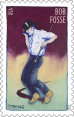
On July 28, National Dance Day, the U.S. Postal Service honored “four influential choreographers who changed the art of dance,” including Isadora Duncan, José Limón, Katherine Dunham and Broadway legend Bob Fosse, who the USPS noted “received one Oscar, three Emmys, and nine Tony Awards during his career. Yet perhaps his greatest contribution was in making dance accessible to millions.” Lincoln Center resident artist James McMullan designed the Innovative Choreographers series “to look like posters advertising a performance” and to capture “the luminosity and mystery of a live dance performance.” The stamp art is based on a classic Photofest image that served as the 1998 paperback cover of Martin Gottfried’s Fosse biography All His Jazz. Nigel Lythgoe (So You Think You Can Dance), who created National Dance Day, hosted the first-day-of-issue dedication ceremony at Grand Park in downtown Los Angeles. The Innovative Choreographers “forever stamps” are now available at post offices nationwide.

Posted in People, Stagers | Tagged , , | Leave a comment

New Girl in Town: Review Roundup

Patrick Cummings and Margaret Loesser Robinson

The Off-Broadway revival of New Girl in Town, the 1957 musical based on Eugene O’Neill’s Anna Christie that hasn’t had a professional outing in New York for 50 years, opened last night at Irish Rep to positive reviews. For the record, the creative team includes George Abbott (book), Bob Merrill (lyrics, music), Charlotte Moore (direction), John Bell (music direction), Barry McNabb (choreography), James Morgan (set), China Lee (costumes), Mary Jo Dondlinger (lights), Zachary Williamson (sound), Robert-Charles Vallance (hair & wigs), and Rich Murray (props). The cast includes Cliff Bemis (Chris), Patrick Cummings (Matt), Danielle Ferland (Marthy), and Margaret Loesser Robinson (Anna).

Joe Dziemianowicz (N.Y. Daily News): “The sunshine girl has raindrops in her eyes.” That lyric, with its potent imagery, has run through my brain since seeing Irish Rep’s revival. … In the title role, Margaret Loesser Robinson brings steeliness and a soft heart as the ex-prostitute looking to start a new life. She brings out all the spiky irony in the song “On the Farm,” in which Anna recalls abuse by men. Patrick Cummings’ sturdy presence and voice serve well as Matt, the sailor who loves and rejects Anna. Cliff Bemis and Into the Woods alum Danielle Ferland lend fine support as Anna’s dad and his friend. With the exception of using a sax soloist throughout the show, a device with diminishing returns, Charlotte Moore’s production is sharp and atmospheric. 3 stars.

Jennifer Farrar (AP): New Girl in Town is enjoying a sprightly Off-Broadway revival at the Irish Repertory Theatre. … Charlotte Moore also finds the bright notes with her smart staging, which includes high-spirited choreography by Barry McNabb and a tuneful four-piece orchestra led by John Bell on piano. The cast includes a talented ensemble of seven actors. … Two of the more serious standouts are the lovers’ duet ‘‘Did You Close Your Eyes,’’ on which Cummings and Robinson harmonize richly, and ‘‘Sunshine Girl,’’ easily the most memorable song in this well-done, satisfying show.

David Finkle (Theater Mania): Hotfoot it over to the Irish Repertory Theatre for the current revival. … One of this outing’s best numbers is the barroom mock-weeper “Sunshine Girl” … and not only does Barry McNabb stage it snappily (as he usually does when handed an Irish Rep musical), but it features a stylish turn by Stephen Zinnato, who also plays sax during multiple scene-changing crossovers. … Whereas the adored Verdon always had some Charity Hope Valentine in her characterizations, Robinson does the part with unflinching realism, which is all to the good.

Posted in Off-Broadway, Shows | Tagged , , , , , | Leave a comment

NYMF 2012: Review Roundup Week 1

The 2012 New York Musical Theater Festival, presented in the summer this year instead of in its usual fall outing, has just passed the halfway mark of its ninth annual edition. Of the ten “full” productions offered in the first week (with another ten slated for the second and final week), there have been a few bright spots, if also a few whose neon hasn’t buzzed so loudly, notably Arnie the Doughnut (with book by Frances Limoncelli and score by George Howe), which hasn’t generated much if any notice in the social media. Of course, the shows aren’t reviewed traditionally in the mainstream press, since they are technically still in development (even if some have received full regional productions), but below are selections of what some theater bloggers (including several posting for the New York Times) have been saying.

Baby Case: Michael Ogborn (book, lyrics, music)

This production has rousing songs, big voices, stylish staging and choreography, first-rate lighting and handsome period costumes. … The show’s only real problem is a certain amorphousness. It’s not clear whether this is a meant to be courtroom drama, media satire, soap opera or something else altogether. And it’s not immediately clear whether our sympathies should lie with Lindbergh … or with Bruno Hauptmann. (http://artsbeat.blogs.nytimes.com)

It could use a nip and a tuck but by and large this makes for an interesting musical. … The musical successfully captures America’s fascination with the case and the opportunistic tendency of man to rear its ugly head. … There are a couple of numbers that could have been cut from this musical. … But, there’s no need to throw this baby out with the bathwater, there is a lot to like here and we might just see more of Baby Case in an extended run somewhere. (http://theandygram.com)

Flambé Dreams: Matthew Hardy (book, lyrics), Randy Klein (music)

This improbable but highly diverting musical fable is quite entertaining, headed by an extraordinary cast of five. … Very clever lyrics by Matthew Hardy are backed up by some catchy melodies by Randy Klein. The score is light and witty. … With some cuts – there are a couple of repetitive speed bumps along the way and perhaps getting the show down to 90 minuets without an intermission Flambé Dreams could be a red-hot ticket. (http://oscaremoore.com)

Walking out of Flambé Dreams, I struggled to think of something positive to say. … Alas, most of the jokes fall flatter than a botched soufflé, with stale laugh lines about Prozac and The Sound of Music. Matthew Hardy, who wrote the book and lyrics, injects a few good rhymes every now and then (particularly in a song about an inflatable sex doll). The music, by Randy Klein, is generally unmemorable. (http://artsbeat.blogs.nytimes.com)

A lot of what made Flambé Dreams appealing was the extraordinary cast of Broadway pros. … The show provides strong and memorable characters for these able performers to embody, and gives them a number of genuine laughs and appealing songs. The show loses steam a bit at about 11 o’clock, as it were, but on the whole I’ll be interested in watching how this show progresses, and what its creators produce in the future. (http://www.everythingmusicals.com)

He’s Not Himself: Marc Silverberg (book, lyrics, music)

He’s Not Himself, after eleven drafts, is just not ready. … As silly plots go this one is a doozie. And that’s not a compliment. … Mr. Silverberg has lots of ideas – some of which are good – floating around without successfully coming together. Perhaps some additional drafts will be forthcoming. Nothing is as painful as seeing excellent actors performing mediocre material as if it were brilliant. He’s Not Himself needs lots of work. (http://oscaremoore.com)

Himself and Nora: Jonathan Brielle (book, lyrics, music)

It is intelligent, humorous, sexy and extremely moving, starring two stars in the making – Matt Bogart and Jessica Burrows. … Himself and Nora is a touching and thoughtful and theatrical telling of their eternal if rocky love for one another. There are so many beautiful songs and beautiful moments. … It is the glorious words and music of Mr. Brielle that make Himself and Nora so moving, exciting and truly an affair to remember. (http://oscaremoore.com)

Himself and Nora is a charming musical. … The show possesses a polish and finesse normally associated with a piece that has had more time to iron the kinks out. … It had me leaving the theater humming the songs. It remains to be seen if it can gain commercial traction. Under normal circumstances I might say it isn’t commercially viable, but I probably would have said that about Next to Normal. (http://theandygram.com)

How Deep Is the Ocean?: Pia Cincotti (book), Peter Cincotti (lyrics, music)

While the plot is implausible, that’s not an insurmountable problem in musical comedy. But the book is likewise uninterested in satire, allegory or anything other than using the story as a slow-moving vehicle to deliver the next eager-to-please moment. Similarly, the music and lyrics … can be catchy, but the variety of tone and subject is sometimes disappointing. … How Deep Is the Ocean? wraps up as expected, content to have delivered a few chuckles. (http://artsbeat.blogs.nytimes.com)

The score and the book seem to be from two very different shows. The book has a madcap tone, but the score is overly ballad-heavy and comes off far more earnest that the show seems to be aiming for. The situation has comic promise, but the book is only intermittently funny, and the songs rarely are. … The show has a sweet disposition, reasonably strong characterizations, and many memorable melodies. But it needs a sure-handed comic director. (http://www.everythingmusicals.com)

Re-Animator: Dennis Paoli, Stuart Gordon & William Norris (book), Mark Nutter (lyrics, music)

The special effects … are the highlight in this uneven, gore-filled, newish musical. … The Evil Dead and The Toxic Avenger, two similar musicals in the same genre, did it better their way. At ninety minutes without intermission Re-animator takes a time for it to really take off. … The music suits the production and is there to support the many wonderful aforementioned “special effects.” (http://oscaremoore.com)

This tuneful adaptation of a 1985 cult horror movie is big on laughs and even bigger on blood. … One particularly ghastly highlight involves a man carrying around his severed head. … Mark Nutter’s pert lyrics and spooky music blend seamlessly into a book … that borrows heavily from the original screenplay. … Hopefully it will rise again in New York sometime soon. (http://artsbeat.blogs.nytimes.com)

Rio: Mitch Magonet & Joey Miller (book, lyrics, music)

An ambitious, if still somewhat inchoate, musical. … The narrative is strong and compelling, although the book and lyrics vacillate between harsh truth and stilted cliché. … It doesn’t really know if it wants to be entertaining or hard-hitting. Perhaps most damning, the show currently features a rushed and pat resolution. … But there’s enough promise here to warrant another draft or two. (http://www.everythingmusicals.com)

Stuck: Riley Thomas (book, lyrics, music)

Stuck may already be pretty much all it can be – it may take some serious overhauling to get this train moving in a more original direction. … There are two big issues with this musical as it stands. One, nearly every opportunity to make this static/stagnant scenario a unique, interesting piece is started and abandoned. … Two, and most importantly, when all is said and done, very little of the show takes us anywhere we haven’t been in dozens of other musicals. (http://jkstheatrescene.blogspot.com)

For the most part, the music was generic, uninteresting, and unmemorable. For the first time in quite a while I found myself at a musical where the book was better than the music. The book contains moments where characters confront each other’s stereotypes upfront in frank conversations. … Playwright Thomas hasn’t written an ending with a clear sense of direction. The characters exit the subway car in pairs having awkward conversation while they do. (http://theandygram.com)

Trouble: Michael Alvarez (book), Ella Grace (lyrics, music)

The potential is there, but it is as messy as a teenager’s room, and cleaning it up just might be more trouble than it is worth. … I ended up caring about what happened to the kids involved, but it took more work on my part than the piece warranted. … Most of the songs are so lyrically generic that any character in the show could sing any of the songs at any time. And they all sound woefully similar. (http://jkstheatrescene.blogspot.com)

Posted in Festivals, Shows | Tagged , , , , , , , , , , , , , , , , , , , , , | Leave a comment

2012 Emmy Nominations

Kerry Washington, Bruce Rosenblum and Jimmy Kimmel

The roster of nominees for the 64th Prime Time Emmy Awards were announced this morning by actress Kerry Washington (Scandal), ATAS chair Bruce Rosenblum, and host Jimmy Kimmel (Jimmy Kimmel Live), who substituted at the last minute (in pajamas) for actor Nick Offerman (Parks & Recreation), who missed the event due to weather-related travel delays. The musical series Glee (Fox) and Smash (NBC) each garnered a handful of nominations, as did the 65th Annual Tony Awards broadcast (CBS). The winners will be revealed September 23, when Kimmel hosts the awards ceremony, to be broadcast on ABC beginning at 7 p.m.

Dot-Marie Jones, who plays Coach Shannon Beiste on Glee, is once again among the contenders for Guest Actress (Comedy Series), while cinematographer Michael Goi and makeup artist Kelley Mitchell and her team (both of them previous nominees as well) received nods in their respective categories.

The list for Smash includes Uma Thurman, who played Rebecca Duvall, in the Guest Actress (Drama Series) category and choreographer Joshua Bergasse, both first-time nominees. A previous winner in writing, composer Marc Shaiman received his first two nods in composing: one with Christian Bacon for the dramatic score of the “Publicity” episode; another with his longtime partner Scott Wittman for the music and lyrics to “Let Me Be Your Star” from the pilot episode.

The 65th Annual Tony Awards is contending for Outstanding Special Class Program. Its additional four nominations went to Glenn Weiss (who has five wins from previous Tony shows) for Directing (Variety Special), Dave Boone and Paul Greenberg (also winners for previous Tony shows) for Writing (Variety Special), Steve Bass (two wins for other variety shows) and Seth Easter for Art Direction (Variety or Nonfiction Program), and Adam Schlesinger and David Javerbaum for their music and lyrics.

Other writers nominated for their music and lyrics include Matthew West for the title song (and contemporary Christian hit) from The Heart of Christmas (GMC), Matthew W. Thompson for “Welcome Back to Hope” from the “Prodigy” episode of Raising Hope (Fox), and Eli Brueggemann with Seth Meyers and John Mulaney (who won last year) for “I Can’t Believe I’m Hosting,” which Jason Segel (How I Met Your Mother) sang on Saturday Night Live (NBC) when he incredulously hosted.

Finally, seven-time Emmy winner Steven Cimino and his team were noted for their technical direction of the Great Performances (PBS) presentation of the Broadway musical Memphis.

Posted in Awards, TV | Tagged , , , , , , , , , | Leave a comment

Dogfight: Review Roundup

Lindsay Mendez and Derek Klena

The new Off-Broadway musical Dogfight, based on the 1991 film directed by Nancy Savoca, opened at Second Stage last night to mixed but generally positive reviews. For the record, the creative team includes Peter Duchan (book), Benj Pasek and Justin Paul (lyrics, music), Joe Mantello (direction), Christopher Gattelli (choreography), David Zinn (sets, costumes), Paul Gallo (lights), Fitz Patton (sound), Joshua Marquette (hair), Bryan Perri (music direction), Michael Starobin (orchestrations). The cast includes Annaleigh Ashford (Marcy), Becca Ayers (Mama), Nick Blaemire (Bernstein), Steven Booth (Gibbs), Dierdre Friel (Chippy), Adam Halpin (Stevens), F. Michael Haynie (Fector), Derek Klena (Eddie Birdlace), Lindsay Mendez (Rose Fenny), James Moye (Lounge Singer), and Josh Segarra (Boland).

Ben Brantley (N.Y. Times): For a show with a snarling title, Dogfight is surprisingly docile. This intimate, carefully tended new musical … takes on some of the nastier aspects of rowdy young servicemen stewing in testosterone, including a woman-humiliating ritual that gives the work its name. Yet even when its boys behave badly – really badly –Dogfight proceeds in a melancholy, tuneful and slightly hesitant trickle that seems to be apologizing for any unpleasantness. … Dogfight finds feet that match its heart only when it settles into a sweet, old-fashioned love story. … There’s a lovely self-conscious chemistry between Ms. Mendez and Mr. Klena. They generate a soft-pedaled, beguilingly clumsy charm in the second act, in which an abashed Eddie returns to Rose to apologize and winds up falling in love. Here, Mr. Pasek and Mr. Paul have written a winning low-key date song for the couple, finding melodic grace in romantic awkwardness. … Dogfight is obviously happiest when it can focus on lovers instead of fighters.

Eric Haagensen (Back Stage): If I were a religious man, I’d have gotten down on my knees and offered a prayer of heavenly thanks after seeing the wholly wonderful new musical Dogfight. … Dogfight is superbly crafted, gratifyingly intelligent, richly observant, and immensely enjoyable. This is musical theater at its finest. … Derek Klena and Lindsay Mendez are strong actor-singers and convey detail and nuance through the musical theater’s equivalent of the close-up: the songs. And what songs they are. … It’s extremely rare these days to encounter new writers working with such confidence and ability. … Their achievement demands recognition, and Dogfight deserves a long and healthy life on Broadway.

Brian Scott Lipton (Theater Mania): The result is a surprisingly moving experience that, by and large, transcends its sometimes clichéd and predictable plot. … Ultimately, though, none of this would be quite so affecting without the work of Klena, who keeps us engaged with Birdlace even in his most despicable moments, and especially Mendez, blessed with a glorious voice and an unerring instinct for veracity that combines for a truly star-making performance. Without question, this winning actress is the real victor in this Dogfight.

David Rooney (Hollywood Reporter): Further workshops or perhaps a regional production might be useful to smooth some nagging flaws, particularly in the uneven second act. But the potential is there. … The early establishing songs here by Benj Pasek and Justin Paul are tuneful and engaging, choreographed with verve by Christopher Gattelli, fresh from his Tony win for Newsies. But there’s a worrying sense of guys-will-be-guys indulgence. The writers seem uncertain about how to balance the comedy with the inhumanity of the Marines’ behavior. … The show is on firmest ground when Eddie and Rose are center stage. The characters are drawn with subtle details, and there’s real vulnerability and yearning in the performances of Klena and Mendez. … Beyond Mantello’s visceral staging of the Vietnam combat sequence, the evocation of the period and its momentous cultural shifts is a little feeble. … If the show is not quite there yet, it’s an intriguing piece with plenty of strong elements on which to build.

Linda Winer (Newsday): Dogfight … crossbreeds a handful of well-worn plot strands into a familiar pattern. And yet, for all the old-time predictability of the wartime setup and the shoehorned topicality of a message about bullying, the show turns into an intimate little heartbreaker of beguiling freshness. … The musical introduces a strong young cast – especially Lindsay Mendez and Derek Klena – that juggles toughness and innocence as if this were easy. And very good news is the songwriting team of Benj Pasek and Justin Paul.

Posted in Off-Broadway, Shows | Tagged , , , , , | Leave a comment