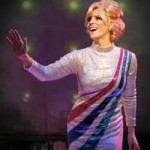
Forever Dusty: Review Roundup

Kirsten Holly Smith

The new Off-Broadway one-act jukebox musical Forever Dusty, based on the life of British pop singer Dusty Springfield, opened to negative-leaning reviews. The creative team includes Kirsten Holly Smith and Jonathan Vankin (book), Randal Myler (direction), Michael Thomas Murray (musical direction), Wilson Chin (sets), Nancy A. Palmatier (costumes), Paul Huntley (hair), Richard Dibella (lights, projections), and Matt Kraus (sound). The cast includes Kirsten Holly Smith (Dusty Springfield), Benim Foster (Jerry Wexler, Bob Thackeray), Christina Sajous (Claire), Coleen Sexton  (Becky, Girl), and Sean Patrick Hopkins (Tom Springfield).

Clark Collis (Entertainment Weekly): The jukebox musical Forever Dusty … covers the British songbird’s personal and professional adventures – from being thrown out of South Africa for refusing to play before segregated audiences to recording her classic 1969 album Dusty in Memphis to her many spells in rehab to her Pet Shop Boys-assisted ’80s comeback – all at a pleasing canter. Star and co-writer Kirsten Holly Smith nicely captures Springfield’s unique blend of Brit tomboy and ‘‘Son of a Preacher Man’’-crooning soul legend, while Christina Sajous offers terrific support as Springfield’s lover. If the result is more good than great – well, it’s worth remembering that, as someone once sang, just being good isn’t always easy.

Brian Scott Lipton (Theater Mania): The life of British pop goddess Dusty Springfield gets put through the blender in the 90-minute biotuner Forever Dusty at New World Stages, and the final concoction is like a semi-successful smoothie: often tasty but sometimes difficult to digest. Star Kirsten Holly Smith is an on-stage talent to be reckoned with thanks to her uber-powerful vocals … and considerable skill as an actress, but the often clumsy script she’s concocted with co-writer Jonathan Vankin does her – and Springfield – no favors. … Nor is there much subtlety in the work of director Randal Myler. … Though I hope Dusty Springfield’s music lives on forever, it’s ultimately more satisfying to listen to her CDs than see her life reenacted in this shaky vehicle.

Marc Miller (Back Stage): Let’s cut to the chase: How well does Kirsten Holly Smith cover “Son of a Preacher Man”? … She may not have quite Dusty’s range or breath control, but Smith is uncannily close vocally, and a visual ringer too. Good thing she’s so good, because dramatically speaking, Forever Dusty is, uh, basic. … When the authors try to integrate numbers into the plot, it’s clumsy indeed. … There’s virtually no set, just rear projections; Matt Kraus’s sound design is so amped up that we can’t tell whether the backup singers are live or MP3 recordings; … and Randal Myler’s direction amounts to traffic-cop duty, hustling bodies on and off to change). … As an evening of Dusty’s greatest hits, though, Forever Dusty is aces. … Smith does Dusty proud.

Steven Suskin (Variety): Why we’d want to see a musical about [Dusty Springfield] remains unresolved in a perfunctory staging peppered with clichés. … Springfield was one of the most popular U.K. female vocalists of her time, noted not only for her voice but for her peroxide-blonde beehive and excessive eye makeup. Forever Dusty takes her from a shy teen singing backup with the cool girls at the convent to stardom, then on to oblivion. Accompanied by a slew of Springfield songs, natch. … [Smith] is clearly dedicated to the material. Her Dusty, though, is far from compelling. … The book and staging are basic at best, and the wall-sized projections are sometimes startling in the New World Stages’ small space. The four-piece band, at least, keeps the beat going through 20-odd songs.

Posted in Off-Broadway, Shows | Tagged , , , , , , | Leave a comment

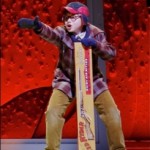
Christmas Story: Review Roundup

Johnny Rabe

The new musical A Christmas Story, based on Jean Shepherd’s 1966 book In God We Trust, All Others Pay Cash and 1983 screenplay A Christmas Story, opened last night at the Lunt-Fontanne to generally positive reviews. It has been a long road to Broadway for the show, which began in 2006, when Joseph Robinette first adapted the story. After a 2008 New York reading, Kansas City Rep hosted the world premiere production in 2009, with the commercial tryout taking place at Seattle’s 5th Ave. Theatre during the 2010 holiday season. The musical then made a five-city tour last year (from Hershey, Pa., to Chicago), in preparation for its Broadway debut this year. The creative team includes Joseph Robinette (book), Benj Pasek and Justin Paul (lyrics, music), John Rando (direction), Warren Carlyle (choreography), Walt Spangler (sets), Elizabeth Hope Clancy (costumes), Howell Binkley (lights), Ken Travis (sound), Tom Watson (hair), Larry Blank (orchestrations), and Ian Eisendrath (music direction). The cast includes Dan Lauria (Jean Shepherd), John Bolton (Old Man), Johnny Rabe (Ralphie), Zac Ballard (Randy), Erin Dilly (Mother) and Caroline O’Connor (Miss Shields).

Erik Haagensen (Back Stage): A Christmas Story: The Musical is yet one more attempt to mine Broadway dollars out of a popular holiday tale. … Joseph Robinette’s efficient book sets the musical specifically in December 1940, the last Christmas before America joined the war, lending it an air of innocence about to be lost. … Songwriters Benj Pasek and Justin Paul … have provided a melodic, well-crafted pastiche score that’s more dutiful than inspired. … Still, the songs, though not always necessary, are never unwelcome. Director John Rando keeps the production’s tongue lightly in its cheek while moving things briskly along, helping to disguise the episodic structure. … A Christmas Story is an unlikely animal: a cynical commercial entertainment with a soul.

Charles Isherwood (N.Y. Times): Every year at this time Broadway producers are seized with the urge to pick parents’ pockets with splashy holiday fare aimed at young audiences. A Christmas Story … wins points for being less glitzy and more soft-spoken than the garish, overbearing musical versions of How the Grinch Stole Christmas and Elf. … Directed efficiently by John Rando, it’s a collage of childhood snapshots. … Mr. Pasek and Mr. Paul have provided a likable, perky score that duly translates all of the major episodes in the story into appropriate musical numbers. … But the sequences that make the children in the audience perk up and stop fidgeting are naturally the big dance numbers led by the smaller fry in the cast.

Andy Propst (Theater Mania): Devotees of the film, as well as theatergoers who have never seen (or even liked) the movie, will be pleased with what they find on stage. Book writer Joseph Robinette faithfully replicates all of the high-points of the source material. … There are a host of winning performances in A Christmas Story, led by Rabe’s beaming but never cloying turn. … The other star of this number is 9-year-old Luke Spring, one of the kids from the energetic but healthily ordinary young people’s ensemble. He delivers a tap specialty like a pint-sized Tommy Tune that literally stops the show. … It’s to the creators’ credit that the show’s final scene contains one tiny detail not found in the film that produces gales of laughter. Originality in a movie-turned-musical? God bless us, everyone.

David Rooney (Hollywood Reporter): A cut above the pack, it’s cute, corny, wholesome and sentimental – all basic requirements for family-friendly seasonal stage entertainment. But it also packs ample heart into its wistful glance back. … Sturdily adapted by Joseph Robinette, it features a peppy, period-flavored score by Benj Pasek and Justin Paul. … The scene-stealer in this splashy big-band production number is pint-sized tap-dancing dynamo Luke Spring. In these songs and others, director John Rando and choreographer Warren Carlyle’s clever use of the dozen talented triple-threat kids in the cast is a winning ingredient. … Unexpectedly, the show pulses with genuine feeling, which should guarantee return engagements.

Steven Suskin (Variety): This tuner boasts a heartwarming but wise story, an impressive score by Broadway newcomers Benj Pasek and Justin Paul, canny staging and a series of laugh-out-loud production numbers. … Joseph Robinette’s book is funny, direct and to the point, even if the plot, like the screenplay, feels at times like a string of unrelated anecdotes. Helmer John Rando does his best recent work with jokes and gags galore. … Warren Carlyle typically starts his numbers with the dancers, then adds the kids doing the same steps, building the numbers into demented delights. Standing out is the littlest boy actor, Luke Spring.

Posted in Broadway, Shows | Tagged , , , , , , , | Leave a comment

Murder Ballad: Review Roundup

Will Swenson, Karen Olivo

The new one-act Off-Broadway rock musical Murder Ballad has opened to mixed reviews. The creative team includes Julia Jordan (book, lyrics), Juliana Nash (lyrics, music), Trip Cullman (direction), Doug Varone (choreography), Mark Wendland (sets), Jessica Pabst (costumes), Ben Stanton (lights), Leon Rothenberg (sound), and Justin Levine (music direction, orchestrations). The cast includes John Ellison Conlee (Michael), Rebecca Naomi Jones (Narrator), Karen Olivo (Sara) and Will Swenson (Tom).

Ben Brantley (N.Y. Times): Murder Ballad is a welcome oddity among recent musicals. It’s a show that knows exactly what it wants to do, and then does it, with no apologizing or backtracking. And as staged with inventive efficiency by Trip Cullman and performed by a top-flight cast of four, Murder Ballad is also self-conscious in just the right way. … Mark Wendland has transformed the MTC Studio at Stage II into a seedy Manhattan boîte (luridly lighted by Ben Stanton), with a long bar, tables and chairs, a pool table and a small stage for the (very loud) band. … Yes, you’ve probably heard it all before, the songs and the story. But familiarity is the point of Murder Ballad. And there’s one thing you won’t know until the last few of this show’s fast 80 minutes: Who gets it, and who done it.

Suzy Evans (Back Stage): What Nash and Jordan have written is essentially an almost plotless song cycle. But thanks to director Trip Cullman’s aggressive, almost interactive staging … the likes of Will Swenson, Karen Olivo, Rebecca Naomi Jones, and John Ellison Conlee may end up at your table, in your face, or on your lap. … Swenson, Olivo, Jones, and Conlee have never sung better, and Nash’s tunes fit their voices like a glove, aided by Justin Levine’s impeccable vocal arrangements. … Not everyone will love the lack of a fourth wall. The Sunday matinee crowd seemed a little bit put off by the cast’s antics and nervous about the proximity of fight scenes. But I can’t imagine what the show is like at the 9 p.m. performance. The energy is electric.

Melissa Maerz (Entertainment Weekly): The best thing about Murder Ballad is that all of this dive-bar drama takes place inside what feels like an actual bar. As you walk into Manhattan Theater Club’s Studio at Stage II, there’s a rock band on stage, and you have to maneuver around a pool table to get to your seat. … The whole thing genuinely feels like a show at a tiny Lower East Side club. And it sounds like a show at a tiny club, too. … Both Olivo and Jones would make phenomenal frontwomen in any band. Olivo doesn’t so much sing the lyrics as take a shot of tequila and blowtorch them. And for a musical about New York’s downtown bar scene, that’s a very good thing. There’s only one problem with the music: It’s much better than the story. … The ending might be a surprise, but what leads up to it isn’t.

Andy Propst (Theater Mania): It’s an intoxicating downtown-style environment from scenic designer Mark Wendland (and lit to perfection by Ben Stanton) – and, sadly, the only aspect of this production that fully succeeds. Jordan’s book sketchily outlines the essentials for the entangled relationships. … To their credit, the performers belt out Nash’s music with electrifying power. … Trip Cullman’s staging, which uses every inch of the space, has an undeniable intensity, and choreographer Doug Varone’s dances possess a sinuousness that is concurrently sensual and sad. Ultimately, however, their efforts fail to make these characters little more than combustible clichés.

Posted in Off-Broadway, Shows | Tagged , , , , , | Leave a comment

Giant: Review Roundup

Brian d'Arcy James

The new Off-Broadway musical Giant, based on the 1952 novel by Edna Ferber that was also the basis for the Oscar-nominated 1956 film, opened to very appreciative reviews. The creative team includes Sybille Pearson (book), Michael John LaChiusa (lyrics, music), Michael Greif (direction), Allen Moyer (sets), Jeff Mahshie (costumes), Kenneth Posner (lights), Brian Ronan (sound), David Brian Brown (hair), Bruce Coughlin and Larry Hochman (orchestrations), Chris Fenwick (music direction), and Alex Sanchez (choreography). The cast includes Enrique Acevedo (Miguel Obregon), Raul Aranas (Polo Guerra), Mary Bacon (Mrs. Lynnton, Adarene Morley), Kate Baldwin (Leslie Lynnton Benedict), Miguel Cervantes (Angel Obregon), Natalie Cortez (Juana Guerra), Rocío Del Mar Vallés (Analita), John Dossett (Uncle Bawley Benedict), Jon Fletcher (Bobby Dietz), P J Griffith (Jett Rink), Michael Halling (Clay Sullivan, Lord Karfrey), Brian D’Arcy James (Bick Benedict), Mackenzie Mauzy (Lil Luz Benedict), Doreen Montalvo (Lupe), Michele Pawk (Luz Benedict), Allison Rogers (Heidi Mueller, Lady Karfrey), Isabel Santiago (Deluvina Obregon), Martín Solá (Dimodeo), Bobby Steggert (Jordy Benedict Jr.), Matthew Stocke (Mike McCormack), Katie Thompson (Vashti Hake Snythe), and William Youmans (Mott Snythe).

Ben Brantley (N.Y. Times): This is a high-reaching musical, and practically every number in it is one of determined aspiration. … But there’s another, countervailing force at work here: a mighty tug of gravity that keeps pulling the show down to earth and even threatens to bury it. That force is the weighty obligation of condensing a plot-packed, multigenerational doorstop of a novel. … It’s a long, crowded journey that Giant takes us on. Fortunately there are picturesque stops along the way, a few you might even call breathtaking. … It tells its long and winding story with admirable clarity. But when Mr. Dossett and Ms. Thompson sing, you realize what you’ve been missing. That’s the distinctive breath of specific lives, which too often in this show are swept up in the relentless winds of saga spinning.

Erik Haagensen (Back Stage): Book writer Sybille Pearson and composer-lyricist Michael John LaChiusa have set themselves a daunting task in wrestling Edna Ferber’s  sweeping 1952 novel about the creation of then-modern Texas into shape as a three-hour show. That they have succeeded as much as they have is cause for celebration. At its best, which is often, Giant is compelling musical theater, full of interesting, complex characters and striking, multilayered songs. … Director Michael Greif stages the show seamlessly on Allen Moyer’s spare set, which combines with lighting designer Kenneth Posner’s washes of color on a cloud-strewn scrim to effectively suggest the tale’s vast open spaces. … I can’t wait to see it again.

Andy Propst (Theater Mania): Superlatives and hyperbole are dangerous things in reviews, but for this three-hour saga that’s set in a state where bigger is always considered better, they seem appropriate. They’re also incredibly well-earned, particularly for LaChiusa, who has created a sweeping, soaring score. … Pearson’s book lays bare the contemporary relevance of Ferber’s story. … With Giant, two natural comparisons to two unquestioned classic musicals come to mind: Oklahoma! which shares the show’s southwestern milieu and Show Boat, which was also inspired by a Ferber novel. It’s probably too early to place this new tuner squarely into this canon of seminal musicals. Nevertheless, mentioning all three in the same breath feels warranted and supremely natural.

Steven Suskin (Variety): What could have been sprawling and unfocused has been rustled into manageable shape, with impressive performances from the two stars. … [LaChiusa] breaks through with a score that is tuneful, expansive and more emotional than intellectual. … [Pearson] makes pretty good sense of Ferber’s novel, developing no fewer than 12 distinct characters and including several riveting scenes straight from the text. … [Greif] keeps things in constant motion, interweaving the many songs and plotlines while conveying a continuous sense of the enormity of the show’s Texas setting. … A musical of gigantic proportions, the show still calls for trimming, some minor character clarification and a stronger ending. Even so, LaChiusa’s Giant is something to see.

Terry Teachout (Wall St. Journal): Giant is the most important new musical to come along since The Light in the Piazza. It’s a show of immense and fully realized promise. … The result is a show that doesn’t have any slow spots – one that feels not long, but big. This musical spaciousness is central to the theatrical effect of Giant. … As lovely as Mr. Moyer’s set is, I wish it were dirtier, just as I wish that Mr. Greif had brought in a diction coach to help the members of the cast, Mr. James in particular, sound more authentically Texan. … Like Oklahoma! before it, Giant tells an all-American tale in a way that is well suited to the present moment. It’s a myth, but an honest one, enacted with high seriousness and great beauty. This show is built to last.

Posted in Off-Broadway, Shows | Tagged , , , , , , | Leave a comment

Scandalous: Review Roundup

Carolee Carmello

The new Broadway musical Scandalous: The Life and Trials of Aimee Semple McPherson has opened to rave reviews for leading actress Carolee Carmello but negative notices for the overall production. The creative team includes Kathie Lee Gifford (book, lyrics), David Pomeranz and David Friedman (music), David Armstrong (direction), Lorin Latarro (choreography), Joel Fram (music direction), Walt Spangler (sets), Gregory A. Poplyk (costumes), Natasha Katz (lights), Ken Travis (sound), Paul Huntley (hair), and Bruce Coughlin (orchestrations). The cast includes Carolee Carmello (Aimee Semple McPherson), Candy Buckley (Minnie Kennedy), Edward Watts (Robert Semple, David Hutton), Roz Ryan (Emma Jo Schaeffer), Andrew Samonsky (Harold McPherson Kenneth Ormiston) and George Hearn (James Kennedy, Brother Bob).

Suzy Evans (Back Stage): Carmello is performing miracles … delivering one of the season’s must-see performances (she’s onstage for all but 11 minutes of the show’s two-and-a-half hours). Unfortunately, Carmello’s miracle work doesn’t extend to Gifford’s flimsy, expository musical, which features uncertain direction by David Armstrong. … Gifford’s book and lyrics sound like she transcribed McPherson’s Wikipedia page and had it set to music. … When Carmello sings, there’s magic in the theater, even if David Pomeranz and David Friedman’s tunes are generic. … There is absolutely no doubt that Carmello is a Broadway superhero.

Charles Isherwood (N.Y. Times): Scandalous … condenses and rearranges McPherson’s story to fit smoothly into the familiar grooves of celebrity biography. In the process the show reduces McPherson’s remarkable life to a cliché-bestrewn fable about the wages of fame. … Scandalous isn’t so much scandalously bad as it is generic and dull. … Ms. Carmello, a gloriously gifted singing actress, has never managed to snag a star-making breakout role on Broadway – not all that surprising in these difficult days for musical theater. Sister Aimee certainly provides plenty of opportunities for Ms. Carmello to thrill us with the purity and power of her voice. … What she cannot do – no singer without the power of miracle could – is bring distinction to songs that never rise above the serviceable.

Michael Musto (Village Voice): Act One is filled with way too many bombastic songs – basically one musical breakdown after another for the lady evangelist – but there’s fire there, and some kind of electricity that reminded me of the better bits from Carrie the Musical. And Broadway favorite Carolee Carmello is committed and powerful in the role of Aimee. … But Act Two is a mess. It’s alternately campy and dull, featuring a stock black character and ending with one more screechy number. The lavish set involves a white stairway to heaven that Scandalous might well end up ascending, if the reviews are bad. But though the show does slide into a pit of absurdity, it would be scandalous to say it’s all just junk. Good for lyricist and book writer Kathie Lee Gifford for stretching with something this ambitious.

Andy Propst (Theater Mania): My purpose is to warn theatergoers off of this woefully undercooked bio-tuner. It’s genuinely unfortunate that Scandalous inspires this sort of reaction. Aimee’s real-life story has all the elements of a potentially engrossing night at the theater. … But the creators consistently undermine Aimee’s tale. First there’s Kathie Lee Gifford’s by-the-numbers book and schmaltzy lyrics. Composers David Pomeranz and David Friedman, abetted by Gifford (who’s supplied additional music), only make matters worse with a generic, bombastic score. Director David Armstrong’s lackluster staging only underscores the mediocrity of the writing. The one person who is certainly not at fault in the musical’s failings is Carmello. She delivers a passionate and rousingly sung performance at every turn.

Steve Suksin (Variety): Carolee Carmello does everything she can to breathe life into this bio-musical of forgotten celeb Aimee Semple McPherson, aka Sister Aimee, but no amount of proselytizing is likely to convert Gothamites. … To its credit, Scandalous doesn’t try to whitewash its heroine’s life … but the book never offers more than a by-the-numbers outline of the life of Sister Aimee. … Gifford, who is credited with additional music along with the book and lyrics, does not impress in her several capacities. … Armstrong’s direction is pageant-like and aimless, and sabotaged by designer Walt Spangler’s scenery. … [Carmello] is hard-working and the resultant performance is admirable, but the material doesn’t allow the actress or Scandalous to be convincing.

Linda Winer (Newsday): There is nothing remotely scandalous about Scandalous: The Life and Trials of Aimee Semple McPherson. … It is well-produced and professional. It’s also not interesting, alas, at least not interesting enough to sustain 2-1/2 hours of fast-forward storytelling and inspirational songs that almost always end in throbbing climax. At least as problematic is the bombardment of nursery-rhyme lyrics … but we have a reason to give thanks, and that is Carolee Carmello. One of our most deeply wonderful, inexplicably underutilized singing actors, Carmello finally gets a giant vehicle that needs her massive talents. … Despite the monotony of the touch-what-you-dream songs, Carmello alone makes Aimee’s journey feel as adventurous as it clearly was.

Posted in Broadway, Shows | Tagged , , , , , , | Leave a comment

Loserville: Review Roundup

Eliza Hope Bennett and Aaron Sidwell

The new West End musical Loserville, inspired by Son of Dork’s 2005 album Welcome to Loserville, has announced it will close Jan. 5, two months earlier than originally scheduled, due in part to lukewarm reviews. The creative team includes Son of Dork frontman James Bourne and Elliot Davis (book, lyrics, music), Steven Dexter (direction), Nick Winston (choreography), Francis O’Connor (sets, costumes), Stephen Snell (costumes), Howard Harrison (lights), and Simon Baker (sound). The cast includes Aaron Sidwell (Michael), Eliza Hope Bennett (Holly), Stewart Clarke (Eddie), Charlotte Harwood (Leia), Richard Lowe (Lucas), Lil’ Chris (Francis), and Daniel Buckley (Marvin), with Jade Albertsen, Sophie Ayers, Laura Bennett, Robbie Boyle, Matthew Bradley, Olly Buxton, Andrew Carthy, Freya Field, Daniel Hall, Lauren Hall, Ollie Hannifan, Dan Krikler, Duncan Leighton, Ashley Luke Lloyd, Megan Louch, Andy Shaw, Sarah Watson and Witney White.

Laura Barnett (Guardian): With new musicals notoriously difficult to launch, it’s no wonder the marketing has been intense for the show … but it also makes it difficult to view it as much more than a cynical attempt to cash in on the lucrative craze for high school-set shows with songs. … Francis O’Connor’s superb design makes the most of the show’s geek-chic aesthetic – the set is a huge microchip – and there are some standout performances among the young cast, particularly from Stewart Clarke as the arrogant jock, Eddie. But there are too many toe-curling moments. … The relentless pop-rock score is also over-loud and affords too little variation of pace and tone; it quickly proves wearisome.

Julie Carpenter (Express): Shows don’t get much perkier than this. … Loserville is a new British musical with a super-keen cast who look like they’re on a sugar high. The set consists of an impressive backdrop of a rudimentary computer circuit while boards with bright, cartoonish scenery somehow reinforce how we’re in the age of the pad and pencil. As for the songs, just because the setting is the Seventies, don’t think glam rock. It’s all upbeat pop and if many of the numbers feel the same they’ll still appeal to boyband fans. Is it the best musical ever? No, but it’s feel-good and frothing with energy while the cast hurl themselves in with gusto. The result is as pick-me-up as a double espresso.

Danielle Goldstein (Time Out): It’s farcical stuff but fun all the same, in the way that High School Musical is unashamedly cheesy and so impossibly lovable. The fast-paced storyline is as saccharine and as predictable as its pop-punk soundtrack – the nerds claim victory over the cool kids, learn how to talk to girls and acknowledge the importance of friendship – but it remains amusing and fluid throughout. Even the set changes are incorporated into the high-energy dance routines, ensuring there’s never a lull in the action. And you can rest assured that in Loserville, action means that the geeks always end up on top.

Henry Hitchings (Standard): It’s a noisy alternative to the slick jukebox musicals that now seem ever more common. … The young cast bubbles over with enthusiasm. Although the performances aren’t consistently polished, they are vigorous. Aaron Sidwell, who used to be Steven Beale in East Enders, leads the way as the determined, awkward Michael, and there’s bright work around him from Eliza Hope Bennett, Richard Lowe and Stewart Clarke. The upbeat vibe is at times cloying, and the faux-American idiom never quite comes off. Nor is there much in the story that feels fresh; the plot is woolly, and the material seems like a mishmash of moments from every teen romantic comedy I’ve ever seen. But Bourne and Davis are undoubtedly skilful songwriters, and Loserville is likeable even if it’s unsubtle.

Charles Spencer (Telegraph): I really wanted to like this show. … The trouble is that Loserville, which proves almost insufferably bright and bouncy, leaves you with a weary feeling of déjà vu and indeed déjà entendu. … Some of the tunes undoubtedly worm their way into the memory. After two hours however their tinny joie-de-vivre has become intolerable. … Steven Dexter’s cartoon-like production is relentlessly and brash and for much of the evening I found myself gazing longingly at the exit sign, desperate to escape this derivative pop-culture pap. The one thing that can be said in Loserville’s favour is that its off-putting title tells you all you need to know about the show.

Paul Taylor (Independent): For a show that supposedly celebrates distinctiveness … it never levitates into its own corresponding originality. Except, that is, through the droll, bright verve of Francis O’Connor’s excellent design. … The songs, on a first hearing, all sound more or less the same and are pounded out with bludgeoning loudness in Steven Dexter’s soulless production. The cast leap about hyperactively but, apart from the odd sequence (such as a Judo match between the geeks and the jocks) there is not much charm in all this robotic freneticism. … When the company sing about wanting a “Ticket Outta Loserville,” they were not, from where I was sitting, on their own.

Posted in London, Shows | Tagged , , , , , | Leave a comment

Drood: Review Roundup

Will Chase, Stephanie Block

The Roundabout Theater Company has received mixed reviews for its Broadway revival of the 1985 Tony-winning musical The Mystery of Edwin Drood. The 2012 creative team includes Rupert Holmes (book, lyrics, music, orchestrations), Scott Ellis (direction), Warren Carlyle (choreography), Paul Gemignani (music direction), Anna Louizos (sets), William Ivey Long (costumes), Brian Nason (lights), Tony Meola (sound), Sam Davis (dance arrangements), Paul Huntley (hair), Angelina Avallone (makeup).

The revival cast includes Stephanie J. Block (Edwin Drood, Alice Nutting), Will Chase (John Jasper, Clive Paget), Gregg Edelman (Rev. Crisparkle, Cedric Moncrieffe), Jim Norton (Chairman, William Cartwright), Chita Rivera (Princess Puffer, Angela Prysock), Andy Karl (Neville Landless, Victor Grinstead), Jessie Mueller (Helena Landless, Janet Conover), Betsy Wolfe (Rosa Bud, Deirdre Peregrine), Nicholas Barasch (Deputy, Nick Cricker), Peter Benson (Bazzard, Phillip Bax), and Robert Creighton (Durdles, Nick Cricker).

Charles Isherwood (N.Y. Times): The pleasure of fingering a killer is not the only one afforded by Scott Ellis’s exuberant production. … This handsome production offers a generous feast for the eyes, trimmed in holiday cheer for an added spritz of currency. Studio 54 has been persuasively refashioned into a facsimile of a 19th-century English music hall by the set designer Anna Louizos. … The luscious bustles and dapper tailcoats of the show’s ladies and gentlemen provide the veteran designer William Ivey Long a perfect palette for his ever-rewarding frolics in the sartorial past. And the evening’s performers … throw themselves into the winking spirit of the show.

David Rooney (Hollywood Reporter): Regardless of the accomplished cast and sparkling design and direction in Roundabout’s Broadway revival, nothing great can come of mediocre material. The show’s biggest selling point is the novelty of having the audience vote to decide the murderer’s identity at every performance. … This electoral element is undeniably a fun gimmick that livens up Act II while solving the quandary of Dickens’ incomplete story. However, the rest of the show, though frequently jolly, is just as often twee and boring. Louizos has built some very witty sets. … And along with lots of knees-up merriment, Warren Carlyle has choreographed a nightmarishly erotic dream ballet. … But all the affectionately antiquated whimsy never quite adds up to robust entertainment.

Steven Suskin (Variety): The Roundabout’s revival of The Mystery of Edwin Drood is a diverting and amiable entertainment. Rupert Holmes’ unconventional musical … was an exuberant romp when Joe Papp’s Public Theater first produced it in 1985. The elements, and the highlights, remain the same, even if the ebullience at Studio 54 seems more manufactured than irrepressible in spots. … Director Scott Ellis, a Roundabout fixture since 1993, turns in his best musical outing in memory. He has imaginatively calibrated the 11 main comedic characters provided by Holmes, allowing them to ham things up this short of too much. He has also done a fine job extending the music-hall ambience across the board, coordinating his work with that of choreographer Warren Carlyle and the design team. … From the first downbeat, this Drood is indeed “off to the races,” albeit with some minor, muddy patches along the way.

Terry Teachout (Wall St. Journal): The Roundabout Theatre Company has brought Drood back to Broadway in a revival directed with rip-roaring éclat by Scott Ellis, and I’ll be surprised if it doesn’t run at least as long as the original 1985 production. For sheer fun, this show is hard to top. … Corny? Sure – but that’s the point. Mr. Holmes spoofs the hoary clichés of the genre with purest affection, and the actors respond accordingly, waggling their eyebrows and twirling their mustaches as though the train (and yes, there’s a train) were headed straight for the nearest young damsel in distress. Mr. Ellis keeps his actors on the gallop, and they give every sign of having the time of their lives.

Linda Winer (Newsday): This is a novelty item, tricked-up with cutesy tangents as a play-within-a-play at a provincial English music hall. Everyone in director Scott Ellis’ wonderful-looking production works very hard at jollying up the audience at the start, rallying a sing-a-long and, ultimately, conducting the voting. Then, the murderer confesses in song. The show does have some jaunty, quasi-operetta music with beautiful harmonic blends and a ravishing cast. … The elaborate painted flats by Anna Louizos appear designed to stay in the theater for a long time, while William Ivey Long’s costumes are crazy-good with brocades and bustles. Warren Carlyle’s choreography includes drug-induced hallucinations with charming chorines. … Considering Dickens’ storytelling genius, the real mystery is why this isn’t fun.

Posted in Broadway, Shows | Tagged , , , , , | Leave a comment

Rest of the Story: Book Reviews

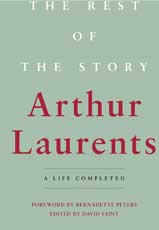
In 2000, Applause Books released Original Story by Arthur Laurents: A Memoir of Broadway and Hollywood, to wide acclaim. In that book, Laurents not only detailed the creation of his landmark musicals West Side Story (1957) and Gypsy (1959) but also his active love life. Now, Applause Books has released the writer-director’s second (and posthumous) volume, The Rest of the Story: A Life Completed, to mixed reviews. The current book is something of a coda to the first, with Laurents recounting the dramatic changes that occurred in his life during the past decade, including not only the fallout from his first memoir but also the loss of his longtime companion.

Brad Hathaway (DC Theatre Scene): The late Arthur Laurents was a truth teller. … I have to do some truth telling of my own. I found his final book, his follow up to the autobiography, to be a poorly-written, rambling, un-focused and rarely interesting bore. … If you enjoyed Original Story By because of its raunchiness, and turn to The Rest of the Story for more of the same, you will be disappointed. It wasn’t the lack of specifics on the bedroom antics of the rich and famous of Hollywood and Broadway that disappointed me, however. It was the lack of stories that help illuminate truths about the world of the theater. … It turns out to be a book only for the few completests who, having read Original Story By, feel a need to read his final 190 pages.

Joe Meyers (Conn. News): The recently published Arthur Laurents memoir The Rest of the Story (Applause Books) fills us in on the decade after the 2000 publication of the playwright and director’s excellent autobiography Original Story By. … Although his tell-it-like-it-is manner must have been a challenge for his associates and friends, for those of us on the outside looking in, Laurents’s approach to memoir writing was refreshingly uncensored. … The new book touches on show business, but is more about the author’s struggle to adapt to the loss of his partner. … The book is also about the changes in Laurents after 2000 that left him regretting things he wrote in the earlier memoir. … The Rest of the Story deals directly with grief and trying to move on in a manner that often recalls Joan Didion’s remarkable The Year of Magical Thinking.

Zachary Stewart (Theater Mania): There will be no next book for the late writer and director Arthur Laurents. But in his final memoir, The Rest of the Story: A Life Completed, the brutally honest Laurents admits to having adopted a different approach to the truth in his waning years. … The most innovative feature of this memoir is the existence of two narrators: the Arthur Laurents of 2009 and the Arthur Laurents of 2011, who comments in italics on his younger, rasher 91-year-old self, and often seems to regret the time he spent on contention. Nonetheless, The Rest of the Story is still rife with Laurents’ famously stinging critiques.  … Yet much of The Rest of the Story is a love song written in beautiful and dynamic prose.

Posted in Books, Books & Media | Tagged , | Leave a comment

Annie: Review Roundup

Lilla Crawford and Sunny

The second Broadway revival of the 1977 musical Annie, based on the 1924 comic strip Little Orphan Annie by Harold Gray, has opened to generally positive reviews. The creative team includes Thomas Meehan (book), Martin Charnin (lyrics), Charles Strouse (music), James Lapine (direction), Andy Blankenbuehler (choreography), David Korins (sets), Susan Hilferty (costumes), David Holder (lights), Brian Ronan (sound), Wendall K. Harrington (projections), Tom Watson (hair), Todd Ellison (music direction), Michael Starobin (orchestrations) Alex Lacamoire (dance arrangements). The cast includes Katie Finneran (Miss Hannigan), Anthony Warlow (Oliver Warbucks), Lilla Crawford (Annie), Brynn O’Malley (Grace Farrell), Clarke Thorell (Rooster Hannigan), J. Elaine Marcos (Lily) and Sunny (Sandy the Dog).

Ben Brantley (N.Y. Times): Say what you will about the current version of Annie, which is directed with a slightly tremulous hand by James Lapine and features the virtuosic Katie Finneran as the villainous Miss Hannigan, you can’t fault the timing of its return to Broadway. … As the city recovers from the crippling onslaught of Hurricane Sandy, and the country wrestles with financial woes not so unlike those of the Great Depression, here comes Annie once again, encouraging us to stick out our chins and grin. … The delicate-featured but indefatigable Ms. Crawford, who is possessed of both a golden glow and a voice of brass, is pretty close to perfect in the title role. If only she had more stage time with Sunny, the performer people couldn’t stop talking about at intermission.

David Rooney (Hollywood Reporter): Could the timing be any better for a Broadway revival of Annie? … James Lapine’s production sensibly chooses not to reinvent the 1977 musical … but what makes this revival disarming is that it’s cute without being cutesy and sweet without being saccharine. … The heart of the show, as it should be, is Crawford’s Annie. The 11-year-old actress has the vocal chops necessary to sock the songs across. … Perhaps the most distinguishing element in this production, however, is Australian musical-theater and opera veteran Warlow’s impressive Broadway debut. … The significant weak spot in Lapine’s staging is the dance interludes. … But overall, this is a winning presentation of an unapologetically sentimental show.

Terry Teachout (Wall St. Journal): This revival of Annie is fabulous. … The 11-year-old Ms. Crawford’s voice is (if I may resort to euphemism) penetrating, but she has more than enough acting talent to compensate for the undeniable fact that she sings REALLY LOUD. As for Mr. Warlow, an Australian musical-theater performer with extensive operatic experience, he’s destined for stage stardom. … David Korins, the set designer, and Susan Hilferty, the costume designer, deserve to be billed right alongside Mr. Lapine. … Andy Blankenbuehler’s choreography, on the other hand, is bouncy and effective but not especially distinctive. … To make Annie not merely watchable but delightful, by contrast, suggests that Mr. Lapine is a theatrical alchemist who has the power to change plain tinsel into solid gold.

Linda Winer (Newsday): For all the freight of timeliness, this remains a sweet spot of a family musical, full of adorable, but not sticky-adorable, waifs punching the air with their teeny fists and belting “Tomorrow” over and over until every cynic within earshot might be a believer. Director James Lapine’s handsome yet lovable vision finds the emotional core without losing the cartoon magic. … Lilla Crawford has a self-possessed intelligence – we’d call it gravitas if that sounded more like fun. She also has lungs to match her big presence. … I’ll hear no negative words about Katie Finneran, who, unlike her much-admired campier predecessors, makes Miss Hannigan both a cruel clown and a genuinely erotic creature whose thwarted ambitions seem just the slightest bit sad.

Posted in Broadway, Shows | Tagged , , , | Leave a comment

Rebecca: Lost Dreams of Manderley

As one of its characters sings, “She’s Gone.” The German musical Rebecca, adapted by Michael Kunze and Sylvester Levay from Daphne du Maurier’s 1938 novel (also the source of Alfred Hitchcock’s 1940 Oscar-winning film), will not appear on Broadway – at least not this season – despite its international success since its world premiere in 2006 at Vienna’s Raimund Theater. Under the direction of Francesca Zambello, the Austrian production ran for three years and was subsequently mounted in Japan, Finland, Hungary, Germany, Switzerland, and Romania.

In 2009, Ben Sprecher produced the first English readings in London: one in May that featured Lisa O’Hare, Julian Ovenden, and Anna Francolini; one in October that featured Sierra Boggess, Brent Barrett, and Susan Rigvava Dumas. Christopher Hampton wrote the new book in collaboration with Kunze and Zambello, who again directed. However, the planned West End production was scuttled because of financial and technical difficulties. In 2011, Sprecher then produced a New York reading, directed by Michael Blakemore and Zambello, that featured Sierra Boggess, Hugh Panaro, and Carolee Carmello. A $12m Broadway production was soon announced for 2012, first for January and then for November.

However, the production was cancelled each time when financing fell through, despite $1m in advance sales. After the second (and final) cancellation, it appears that four supposed investors never existed and that a fifth was scared away by an anonymous e-mail. Ronald G. Russo, counsel for Sprecher, released a statement this past Sunday saying, “Following an extensive search over the last week, I can now confirm that there is no evidence whatever that ‘Paul Abrams,’ or any of the other three investors brought to this production by Mr. Hotton, ever existed.”

As the N.Y. Times reported, it was Mark C. Hotton who connected Sprecher to Abrams, the supposed wealthy South African businessman who pledged $4.5m, some ten times more than normally pledged by wealthy investors. Hotton apparently was to receive a 6 percent commission on the money he helped raise, an arrangement once common but rare today. Producers usually now grant a small percentage of weekly profits to such middlemen.

Neither Hotton nor Sprecher have been charged with any crime, but the FBI and federal prosecutors in Manhattan have begun criminal investigations into the financial collapse of the musical production.

Posted in Business, Producing | Tagged , , , , , , , | Leave a comment