2020 N.Y. Drama Critics’ Circle Awards

Larry Owens (center) in A Strange Loop

Michael R. Jackson’s musical A Strange Loop was honored this morning by the New York Drama Critics’ Circle as best musical of the 2019-20 season. The critic’s circle also awarded a special citation to David Byrne’s staged concert version of his 2018 album American Utopia. The awards, which include a $2,500 cash prize, will be presented in a virtual ceremony on April 28.

For the record, A Strange Loop was presented Off-Broadway June 17 to July 28, 2019, at Playwrights Horizons. The creative team included Michael R. Jackson (book, lyrics, music), Stephen Brackett (director), Raja Feather Kelly (choreographer), Arnulfo Maldonado (sets), Montana Levi Blanco (costumes), Jen Schriever (lights), Alex Hawthorn (sound), Cookie Jordan (hair), and Rona Siddiqui (music direction). The cast was Larry Owens (Usher), L Morgan Lee (Thought 1), James Jackson Jr. (Thought 2), John-Michael Lyles (Thought 3), John-Andrew Morrison (Thought 4), Jason Veasey (Thought 5), and Antwayn Hopper (Thought 6).
David Byrne (center) in American Utopia

American Utopia was presented on Broadway Oct. 20, 2019, to Feb. 16, 2020, at the Hudson Theatre. It is scheduled to reopen this September. The creative team included David Byrne and Brian Eno (lyrics and music), Daniel Lopatin (addl. lyrics and music), Annie-B Parson (musical staging, choreography), Rob Sinclair (lights), Pete Keppler (sound), and Karl Mansfield and Mauro Refosco (musical direction). The cast was David Byrne (guitar), Jacquelene Acevedo (percussion), Gustavo Di Dalva (percussion), Daniel Freedman (percussion), Chris Giarmo (vocals), Tim Keiper (percussion), Tendayi Kuumba (vocals), Karl Mansfield (keyboard), Mauro Refosco (percussion), Stéphane San Juan (percussion), Angie Swan (guitar), and Bobby Wooten III (bass).

Posted in Awards, Stage | Tagged , , , , | Leave a comment

Making Musicals: Organizing Your Rhymes

Sondheim

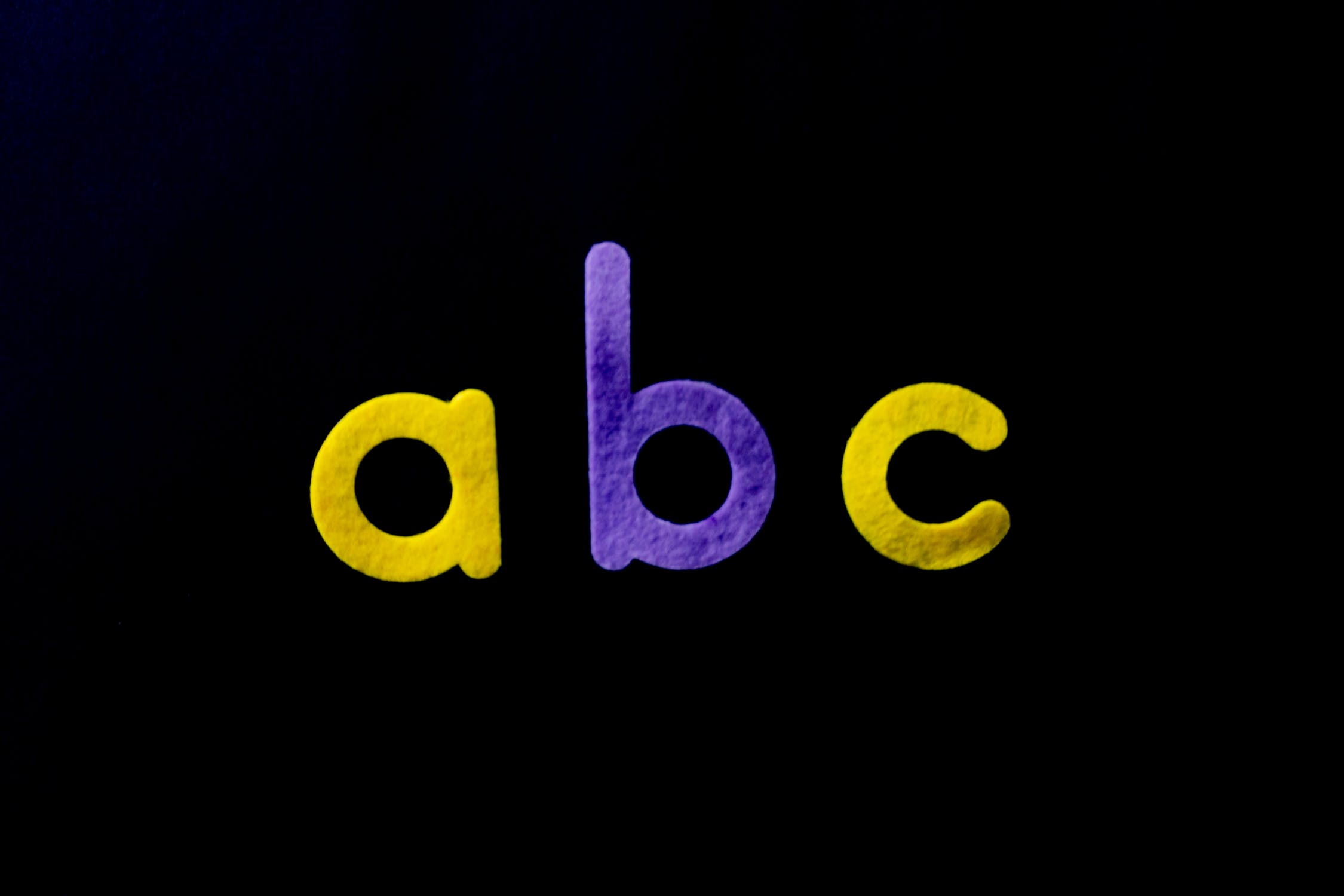
Organizing your rhymes is like organizing your stanzas. The first rhyme you hear is “a,” the second is “b,” the third is “c,” and so on. If you repeat a stanza of music, you should use the same pattern of rhymes. The most common combinations are those that rely on repetition (aaaa, aabb) and those that rely on variation (abab, abba).

Two forms that use repetition are “monorhyme” (aaaa) and “rhyming couplets” (aabb). An example of monorhyme is Stephen Sondheim’s “America” from West Side Story.

I like to be in America (a)
Okay by me in America (a)
Everything free in America (a)
For a small fee in America (a)

An example of rhyming couplets is Oscar Hammerstein II’s “My Favorite Things” from The Sound of Music.

Girls in white dresses with blue satin sashes (a)
Snowflakes that stay on my nose and eyelashes (a)
Silver white winters that melt into springs (b)
These are a few of my favorite things (b)

Two forms that use variation are “alternate rhyme” (abab) and “enclosed rhyme” (abba). An example of alternate rhyme is Herbert Kretzmer’s “I Dreamed a Dream” from Les Misérables.

Then I was young and unafraid (a)
And dreams were made and used and wasted (b)
There was no ransom to be paid (a)
No song unsung, no wine untasted (b)

An example of enclosed rhyme is Howard Ashman’s “Beauty and the Beast” from Beauty and the Beast.

Certain as the sun rising in the east (a)
Tale as old as time (b)
Song as old as rhyme (b)
Beauty and the beast (a)

That’s the basics of lyrics. For inspiration, browse Sondheim’s two-volume set from 2011, Finishing the Hat (1954-81) and Look, I Made a Hat (1981-2011), with his “attendant comments, principles, heresies, grudges, whines and anecdotes.” Also check your local library’s e-book and audiobook services for Hammerstein’s Lyrics (1949), with his essay “Notes on Lyrics”; Ira Gershwin’s Lyrics on Several Occasions (1959), with “informative annotations” on how he wrote; and Robert Gottlieb’s Reading Lyrics (2000), with more than 1,000 lyrics, many from musicals.

For exercises in lyric writing, try The Making of a Musical (1977) by Lehman Engel, with assignments from his legendary workshop that taught writers from Lynn Ahrens to Maury Yeston — and inspired the musical A Class Act: A Musical About Musicals, based on the life of A Chorus Line lyricist Ed Kleban. To learn about Broadway’s major lyric writers, look for Word Crazy (1991) by Thomas Hischak.

Vocabulary from this week: comparison, wordplay that compares two things, such as metaphor (directly comparing) and simile [SIM-uh-lee] (indirectly comparing using “like” or “as”); eleven o’clock number, the song at the climax; false rhyme (imperfect rhyme), where only the final vowel or consonant sounds match, such as assonance (vowel sounds) and consonance (consonant sounds); onomatopoeia [on-uh-mah-tuh-PEE-uh], playing with word sounds; portmanteau [port-man-TOE], playing with word blends; pun, playing with word meanings; reprise [reh-PREEZ], a repeated song that reveals a plot development; rhyme scheme, the pattern of repeated and varied rhymes, such as monorhyme (aaaa), rhyming couplets (aabb), alternate rhyme (abab), and enclosed rhyme (abba); song form, the pattern of similar and contrasting sections, such as AAA (verse form), AABA (ballad form), ABAB (verse-chorus form); and true rhyme (perfect rhyme), where both the final vowel and consonant sounds match.

Next, the rhythm.

Posted in Writing | Tagged , , , , , , , , , , , , | Leave a comment

Making Musicals: The Rhymes

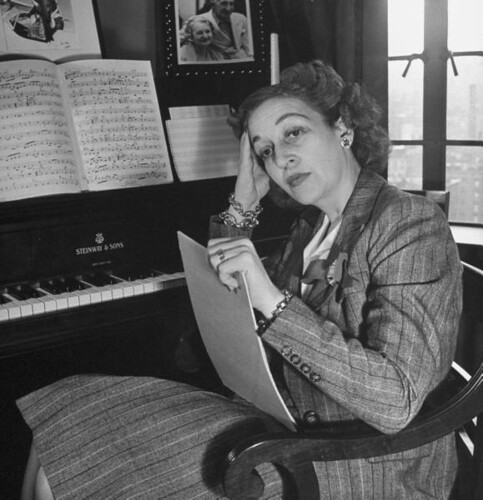
Dorothy Fields

Rhyming is using similar sounds among words. A song doesn’t have to rhyme, but it will help people remember your music — and your message. One-syllable rhymes are called “masculine” rhymes, such as “glad / sad” and “today / sleigh.” Notice that rhymes aren’t always spelled alike, but they do sound alike.

Multiple-syllable rhymes are called “feminine” rhymes, such as “denying / sighing” and “jealous / tell us.” Notice here that it’s the sounds, not the number of words, that’s important. When a rhyme is made of more than one word, like “tell us,” it’s also called a “mosaic” rhyme.

W.S. Gilbert was a master of mosaic rhymes, such as “lot o’ news / hypotenuse” in “Modern Major-General” from Pirates of Penzance. His influence can be seen in lyricists from Lorenz Hart to Yip Harburg to Lin-Manuel Miranda, who rhymes “medicine / debt is in” in “Cabinet Battle #1” from Hamilton.

The examples above are all “true” (or perfect) rhymes. The final sounds of the rhymes (the consonant and the vowel sounds) match exactly. True rhymes are most common in theater songs.

In “false” (imperfect, near, slant) rhymes, only the sounds of the vowels or the consonants match. These are most common in pop songs. “Assonance” is when only the vowel sounds match, such as “together / forever” and “home / alone,” and “consonance” is when only the consonant sounds match, such as “wrong / young” and “buddy / body.”

Where should you rhyme? Most rhymes happen at the end of phrases, but some happen in the middle. “End” rhymes reinforce your message by highlighting important words, such as Miranda’s “Will they know what you overcame? / Will they know you rewrote the game?” in “Alexander Hamilton” from Hamilton and Stephen Schwartz’s “I really hope you get it / And you don’t live to regret it” in “Defying Gravity” from Wicked.

“Internal” rhymes are surprises that perk up the ear and add a bit of energy to a song, such as Cole Porter’s “Flying so high with some guy in the sky is my idea of nothing to do” in “I Get a Kick Out of You” from Anything Goes (with five internal rhymes) and Shaiman and Wittman’s “You can’t stop the motion of the ocean or the sun in the sky” in “You Can’t Stop the Beat” from Hairspray (with one internal rhyme).

Of course, you don’t have to rhyme every line to make a song memorable. Other types of wordplay can make your lyrics interesting. “Onomatopoeia” is playing with word sounds, such as Ralph Blane’s “Ding, ding, ding went the bell” in “The Trolley Song” from Meet Me in St. Louis, while “portmanteau” is playing with word blends, such as “frenemy” and “ginormous,” and “pun” is playing with word meanings, such as “What’s so good about goodbye.” A final type of common wordplay is comparison. “Similes” are comparisons that use the words “like” or “as,” such as “You’re as cold as ice,” while “metaphors” are comparisons that don’t, such as “My heart melted.”

As you write lyrics, remember the advice of Dorothy Fields: “Don’t fall in love with what you believe is a clever rhyme. … Think about what you want to say and then look for the most amusing or graceful way you can say it.”

If you need help on rhyme, browse Clement Wood’s Rhyming Dictionary, which Stephen Sondheim recommends.

Next, organizing your rhymes

Posted in Writing | Tagged , , , , , , | Leave a comment

2020 Lucille Lortel Nominees

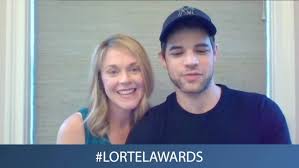
Yesterday, husband and wife musical performers Jeremy Jordan and Ashley Spencer announced the nominees of the 35th annual Lucille Lortel Awards for Outstanding Achievement Off-Broadway. The 2020 awards ceremony will be presented online May 3, beginning at 7 p.m. The virtual host and presenters will be announced later. The Outstanding Musical nominations included the following five new works.

In the Green: This play with music explores the origins of one of Medieval history’s most powerful and creative women: Hildegard of Bingen. Presented June 27-Aug. 4, 2019, at Lincoln Center Theater. The creative team included Grace McLean (playwright), Lee Sunday Evans (director), Kristen Robinson (sets), Oana Botez (costumes), Barbara Samuels (lights), Nicholas Pope (sound), Amanda Villalobos (puppets), and Ada Westfall (music direction). The cast included Rachael Duddy (Clementia, Volmar, Hildegard), Grace McLean (Jutta), Mia Pak (Shadow, Sigewize), Ashley Perez (Maria, Hildegard’s Mother, Marchioness, Hildegard), and Hannah Whitney (Osanna, Hildegard).

Octet: In this a cappella musical, eight Internet addicts in the support group “Friends of Saul” gather in a church basement to share their stories. Presented May 19-June 30, 2019, at Signature Theater. The creative team included Dave Malloy (book, lyrics, music), Annie Tippe (director), Amy Rubin and Brittany Vasta (sets), Brenda Abbandandolo (costumes), Christopher Bowser (lights), Hidenori Nakajo (sound), and Or Matias (music direction). The cast included Adam Bashian (Ed), Kim Blanck (Karly), Starr Busby (Paula), Alex Gibson (Henry), Justin Gregory Lopez (Toby), J.D. Mollison (Marvin), Margo Seibert (Jessica), and Kuhoo Verma (Velma).

Soft Power: Presented Oct. 15-Nov. 17, 2019, at the Public Theater. The Asian exoticism of The King and I is one issue that ignites this musical about a Shanghai theater producer who forges a powerful bond with Hillary Clinton. The creative team included David Henry Hwang (book, lyrics), Jeanine Tesori (addl. lyrics, music), Leigh Silverman (director), Sam Pinkleton (choreographer), Clint Ramos (sets), Anita Yavich (costumes), Mark Barton (lights), Kai Harada (sound), Tom Watson (hair & makeup), Bryce Cutler (video), and Chris Fenwick (music direction). The cast included Jon Hoche (Chief Justice, Hali Aohala), Kendyl Ito (Jing, Prof. Li Biyu), Francis Jue (DHH), Austin Ku (Bobby Bob, Ju Ming), Raymond J. Lee (Randy Ray, Yao Tuo, Veep), Alyse Alan Louis (Zoe, Hillary), Jaygee Macapugay (Betsy, Long Lin Kun), Geena Quintos (Airport Greeter), and Conrad Ricamora (Xue Xing).

The Secret Life of Bees: Presented June 13-July 21, 2019, at Atlantic Theater Company. In this musical adaptation of Sue Monk Kidd’s 2001 novel, a young girl and her black caregiver find refuge in the world of bees and spirituality. The creative team included Lynn Nottage (book), Susan Birkenhead (lyrics), Duncan Sheik (music), Sam Gold (director), Chris Walker (choreographer), Mimi Lien (sets), Dede M. Ayite (costumes), Jane Cox (lights), Dan Moses Schreier (sound), Cookie Jordan (hair & makeup), Achesonwalsh Studios (puppets), and Jason Hart (music direction). The cast included Romelda T. Benjamin (Queenie), Joe Cassidy (Clayton), Vita E. Cleveland (Violet), Eisa Davis (June), Matt DeAngelis (Silas), Manoel Feliciano (T-Ray), Brett Gray (Zachary), Jai’Len Christine Li Josey (Sugar Girl), LaChanze (August), Anastacia McCleskey (May), Saycon Sengbloh (Rosaleen), Nathaniel Stampley (Neil), and Elizabeth Teeter (Lily).

A Strange Loop: Usher works a job he hates while writing a musical, about a writer working a job he hates while writing a musical. Can he break out of this strange loop? Presented June 17-July 28, 2019, at Playwrights Horizons. The creative team included Michael R. Jackson (book, lyrics, music), Stephen Brackett (director), Raja Feather Kelly (choreographer), Arnulfo Maldonado (sets), Montana Levi Blanco (costumes), Jen Schriever (lights), Alex Hawthorn (sound), Cookie Jordan (hair), and Rona Siddiqui (music direction). The cast included Larry Owens (Usher), L Morgan Lee (Thought 1), James Jackson Jr. (Thought 2), John-Michael Lyles (Thought 3), John-Andrew Morrison (Thought 4), Jason Veasey (Thought 5), and Antwayn Hopper (Thought 6).
Posted in Awards, Stage | Tagged , , , , , | Leave a comment

Making Musicals: Organizing Your Lyric

A song is a group of similar and contrasting sections (stanzas). The first section you hear is “A” (verse). The second is “B” (chorus or bridge). The third is “C,” and so on. If you repeat a section of music, even if the words are different, it’s still given the same letter. The three most popular combinations are AAA, ABAB, and AABA.

AAA is used in many hymns and folk songs. The title is usually in the first or last line of each verse (A). The same section of music is sung again and again with different words each time. It works well for self-contained stories (this “A” happened, then that “A” happened, etc.) and list songs (there’s this “A,” then there’s that “A,” etc.). One caution is to avoid letting the repetition make the song feel like it’s in an endless loop. Build the excitement of the self-contained story or the impact of the items on the list.

Examples include “Amazing Grace” by John Newton (sung by Judy Collins), “Kansas City” by Richard Rodgers and Oscar Hammerstein II (from Oklahoma!), “I Walk the Line” by Johnny Cash, “On Broadway” by Jerry Leiber and Mike Stoller (sung by George Benson), “Nothing” by Marvin Hamlisch and Ed Kleban (from A Chorus Line), and “Born in the U.S.A.” by Bruce Springsteen.

ABAB is used in many pop songs. The song’s story is told in the verses (A), which alternate with the same chorus (B). The title is usually in the first line of the chorus. It can illustrate cause and effect (this “A” caused “B,” then that “A” caused “B,” etc.) or an argument (there’s this “A” but also “B,” then there’s that “A” but also “B”). One caution is to avoid letting the song feel like a seesaw without a clear outcome or emotional build.

Examples include “With a Little Bit of Luck” by Alan Jay Lerner and Frederick Loewe (from My Fair Lady), “California Girls” by The Beach Boys, “Sunrise, Sunset” by Jerry Bock and Sheldon Harnick (from Fiddler on the Roof), “Candle in the Wind” by Elton John and Bernie Taupin,” “I Wanna Dance with Somebody” (sung by Whitney Houston), and “Oops, I Did It Again” (sung by Britney Spears). For more AAA and ABAB (verse-chorus) songs, watch Rob Hartmann’s playlist.

AABA is used in many Broadway songs. The title is usually in the first or last line of each verse (A), in the same part of the line. The bridge (B) contrasts with the verse by using different chords, melody, and lyrical focus. It works well to show the development of an idea or a dramatic moment, with the bridge serving as a short side road that either lightens or darkens the emotional trajectory. One caution is to make sure the bridge, that light or dark side road, logically appears along the emotional path laid by the previous sections.

Examples include “Ol’ Man River” by Jerome Kern and Oscar Hammerstein II (from Show Boat), “Over the Rainbow” by Harold Arlen and Yip Harburg (from Wizard of Oz), “So in Love” by Cole Porter (from Kiss Me, Kate), “Crazy” by Willie Nelson (sung by Patsy Cline), “Yesterday” by The Beatles, and “What I Did for Love” by Marvin Hamlisch and Ed Kleban (from A Chorus Line). For more AABA songs, watch Rob Hartmann’s YouTube playlist.

Choose the structure that works best for each of your songs, then starting refining the image organization.

Next, the rhymes.

Posted in Writing | Tagged , , , | Leave a comment

Making Musicals: The Lyrics

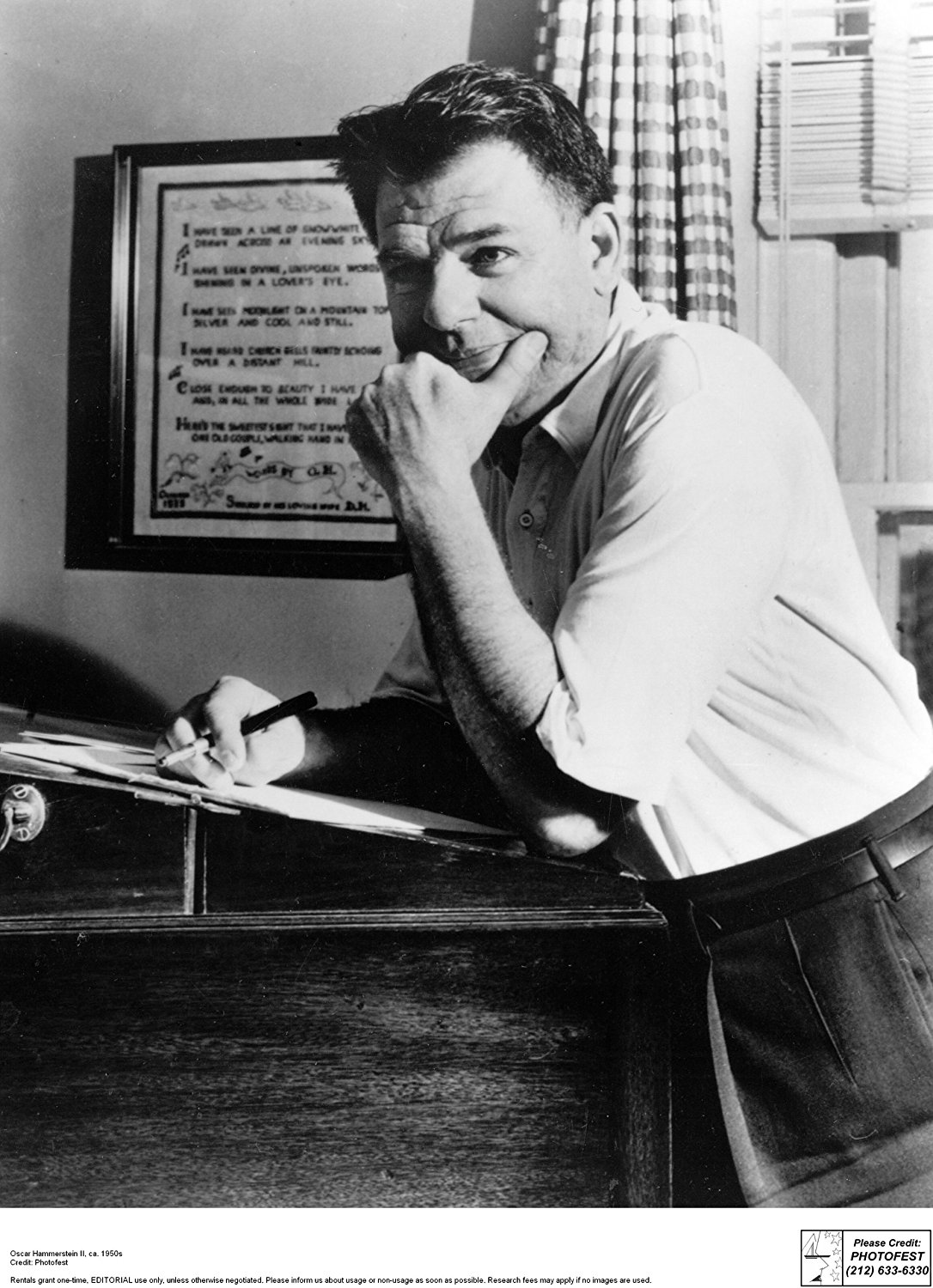
Hammerstein

Before you write lyrics for your show, you should be aware of two distinctions. First, there is a difference between lyrics and poetry. Poems live on the page, lyrics live on the stage. We read poems at our own pace, but we hear lyrics at the pace of the music.

Second, there is a difference between theater lyrics and pop lyrics. Composer Jason Robert Brown said, “Pop songs are about establishing a mood. … Theater songs are about going to a different place.” Songwriter Benj Pasek put it this way: “A pop song is like an adjective. … A theater song is like a verb.” As I wrote in yesterday’s post, the songs in your show are not relief from the action, they are the action.

To help the audience understand our songs, we need to be aware of two main aspects of speech. First is phonetics (word sounds). Some combinations of sounds are hard to understand. For example, “Excuse me while I kiss the sky,” in Jimi Hendrix’s song “Purple Haze,” is often heard as “Excuse me while I kiss this guy.”

The second is semantics (word meanings). Some combinations of words are hard to understand. The best lyrics are conversational. Avoid inverting a phrase for a rhyme, like “When we go out and walk, with you I like to talk.”

Now, let’s start building a lyric. First, choose a title. The title will be the focus of your main idea and imagery. If you “head out on the highway” “until your ship comes in,” you will confuse the audience. Make a list of words, images, and phrases that your title brings to mind. Next, group those items into the patterns, themes, or structures you notice. Then choose three groups for your beginning, middle, and end. You may end up with more than three sections, but choose three for now. Organize those three groups so the items flow in a logical pattern, each section adding something new about your idea.

For example, listen to Oscar Hammerstein’s lyric of “Some Enchanted Evening” for Emile in South Pacific. Beginning, looking across the room (“You may see a stranger”). Middle, listening across the room (“You may hear her laughing”). End, moving across the room (“When you feel her call you”). Reading the lyric, you can almost see Emile as he discovers his new love. Seeing your character in motion is a good exercise to help structure your lyric. Also notice the other level of organization in this lyric, the grouping of sensory images: seeing, hearing, and feeling.

Next, listen to Alan Jay Lerner’s lyric of “On the Street Where You Live” for Freddie in My Fair Lady. Beginning, entering the street (“I have often walked”). Middle, walking down the street (“Are there lilac trees”). End, stopping on the street (“People stop and stare”). Again, just reading the lyric, you can almost see Freddie in action. Also notice how Lerner grouped his images in emotional power: inanimate objects in the beginning; nature in the middle; and people in the end.

Before I close, here’s advice from Oscar Hammerstein’s “Notes on Lyrics,” when you think your lyric isn’t good enough: “The most important ingredient of a good song is sincerity. … However important, however trivial, believe it.”

To see how lyrics look on the page, dip into Hal Leonard’s Lyric Library series. Each book has about 200 songs from one genre, including two volumes of Broadway songs.

Next, organizing your lyric.

Posted in Writing | Tagged , , , , , , | Leave a comment

Making Musicals: The Song Moments

“Story” is what happens. It’s the narrative center. “Plot” is why it happens. It’s the emotional center. This should be familiar, if you read last week’s post on finding an idea. In Aspects of the Novel (1927), E.M. Forster put it this way: “‘The king died and then the queen died’ is a story. … ‘The king died and then the queen died of grief’ is a plot.”

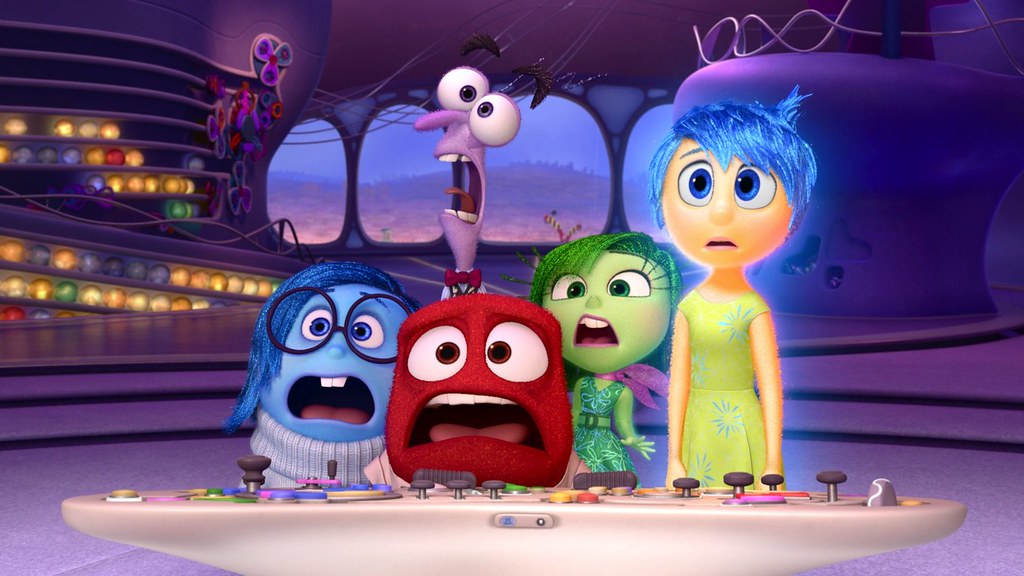
Songs should emerge from the plot (emotion), not comment on or describe the story (narrative). Songs are not relief from the action, they are the action, they are the moments when one domino falls into another, when the hero changes a little bit, when emotion bubbles to the surface — whether it’s joy, sadness, anger, fear, or disgust.

Writer John Kenrick believes three experiences (emotional crises) offer the best motivation for songs. First is transition. The character changes what they want, which changes what they do, like “Soliloquy” from Carousel. Second is realization. The character finally understands the effect of something done or left undone, like “The Party’s Over” from Bells Are Ringing. Third is decision. The character doubles down on a want or tactic, like “Don’t Rain on My Parade” from Funny Girl.

Once you know the motivation to sing, how do you sing about it? Bob Fosse believed there were two basic types of songs. First are “I Am” songs, essentially how a character feels about the way things are, either supporting or challenging the status quo, like “Jet Song” from West Side Story and “Belle” from Beauty and the Beast.

Second are “I Want” songs, about inviting or avoiding change, like “Over the Rainbow” from Wizard of Oz and “Wouldn’t It Be Loverly” from My Fair Lady. The conditional love song is a common variety of “I Want,” like “People Will Say We’re in Love” from Oklahoma! and “If I Loved You” from Carousel.

Fosse called everything else “new songs,” many of which serve as signposts on the journey of a musical, such as the “opening number,” which states who and what the story is about and how it will work, like “Comedy Tonight” from A Funny Thing Happened on the Way to the Forum.

Another is the “reprise,” which repeats all or part of a song, often with new words, to reflect a plot development, like “Let Me Entertain You” from Gypsy and “Agony” from Into the Woods.

A third is the “11 o’clock” (or “tent pole”) number, a climax that energizes the show toward the end of an act, like “Tevye’s Dream” from Fiddler on the Roof and “Sit Down, You’re Rockin’ the Boat” from Guys and Dolls.

And finally, there is the “finale,” which provides a powerful impression at the end of an act.

Listen to some theater songs and try to figure out the motivation and emotion behind them. Then identify the song moments in your show and the types of songs that would work for each.

Check your local library’s e-book and audiobook services for The Secret Life of the American Musical (2016) by Jack Viertel for more on song spotting. Before tomorrow’s post on lyrics, listen to Terry Gross’s 2012 NPR interview with Stephen Sondheim about lyric writing.

Other free offerings include weekly shows from National Theatre at Home, Andrew Lloyd Webber’s The Show Must Go On!, and the Off-Off-Broadway company HERE. There are also regular posts of the PBS Great Performances series, Disney on Broadway Live classes, and 54 Below At Home concerts.

Next, the lyrics.

Posted in Writing | Tagged , , , , , , , , , , , , | Leave a comment

Making Musicals: The Dialogue

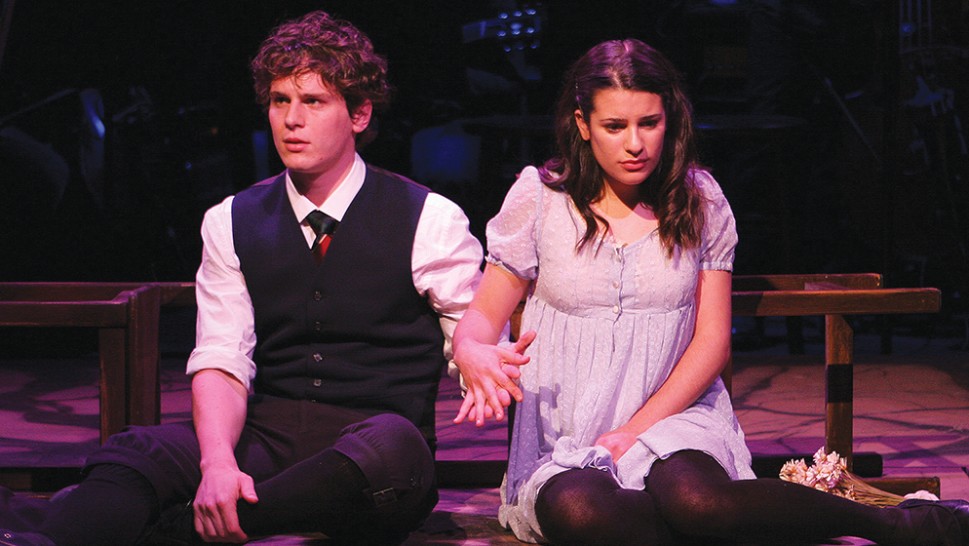
Groff and Michele in “Spring Awakening.”

Each scene is like a mini-musical, with its own beginning, middle, and end. Before you write any dialogue, decide how the scene begins. Playwright David Mamet asks three questions: “1. Who wants what from whom?, 2. What happens if they don’t get it?, 3. Why now?” That last question is about the point of attack, the complication in the beginning that kicks the scene into motion.

In the middle of the scene, keep three things in mind. First is the objective. This is what the character wants so much now that they have to speak up. Second is the obstacle. This is the roadblock in the way of the character’s objective. Third is tactic. This is how the character plans to get around that obstacle. But don’t let their first plan succeed too easily — or the story is over. When the first tactic doesn’t work completely, the character tries another … and perhaps another, “until finally” we reach the climax of the scene.

By the end of the scene, the character has run out of tactics for now and either doesn’t have what they want or has some of what they want (but not everything).

How should you write dialogue? Look to your character sketches for words and phrases that sound real for them. If you’re not sure, cast the show in your mind with friends or celebrities. Second, study how your friends and family listen (or don’t) to each other. And finally, remember that people don’t always say what they mean.

How should you not write dialogue? There are two common problems: overwriting and tired writing. One type of overwriting is exposition. Dialogue is about today’s conflict, not yesterday’s. If we must know something about the past, have a character use it as ammunition in today’s conflict. A second type is filler. Avoid padding like “Well, you see, John.” If it isn’t important to the character, it won’t be to the audience. A third type is the monologue. People rarely get to talk for long in real life. We constantly interrupt each other — trying to achieve our own objective or obstruct someone else’s. If you find yourself compelled to write a monologue, it could mean you’ve found a powerful song moment.

One type of tired writing is the cliché. If a character isn’t talking to reach an important objective, the dialogue can feel boring. Another type is writing “on the nose.” Characters don’t always say what they’re thinking. They use misdirection as one tactic to hide their objective. A third type is the soapbox. People talk about what’s important in the scene, what’s at stake. Like the monologue, if you find yourself compelled to write a soapbox speech, it could mean you’ve found a powerful song moment.

Now, using your outline as a guide, begin listing the possible scenes in your musical and writing dialogue for them. As you hear the characters talk, keep an ear out for where songs may occur, where the emotions start to bubble up. Scenes usually build to a song, though they sometimes flow from one. We’ll work on the songwriting later. For now, keep writing dialogue and reading it aloud to yourself (or another person) to hear how it sounds.

Before you get too far, though, watch the second half of Young Jean Lee’s workshop, which is about writing dialogue, and watch John Cariani’s half-hour session for Broadway Teachers’ Workshop, which includes three exercises to help you write dialogue.

That’s the basics of the book. Consider reading Words with Music (1972) by Lehman Engel, for more about libretto writing, and check your local library’s e-book and audiobook services for the following libretto collections: American Musicals (2014) by Laurence Maslon, Great Musicals of the American Theatre, Vol. 1 and Vol. 2 (1976) and Great Rock Musicals (1979) by Stanley Richards, and The New American Musical (2001) by Wiley Hausam.

Take time to browse the playlist of theater livestreams on Theater Development Fund’s site and the videos at Broadway.com’s Living Room Concerts and The Actors Fund’s Stars in the House. There’s also the new livestream reunion of the original cast of Spring Awakening, the recent release of “Bossed Up” (the second-act opening song cut from Mean Girls during its world premiere in D.C.), and a behind-the-scenes look at every song in Ragtime from Ahrens and Flaherty.

Vocabulary from this week: antagonist (opponent), the character in conflict with the hero; exposition (backstory), what happened before the story begins; objective (motivation), what a character wants; obstacle, what stands in the way of a character’s objective; “on the nose,” a character saying exactly what they think; protagonist (hero), the character we follow in the story; score, the music of the show; script (book, libretto), the words of the show; subtext, a character’s unspoken thoughts and objectives; and tactic, how a character gets what they want.

Next, the song moments.

Posted in Writing | Tagged , , , , , , , , , , , | Leave a comment

Making Musicals: The Characters

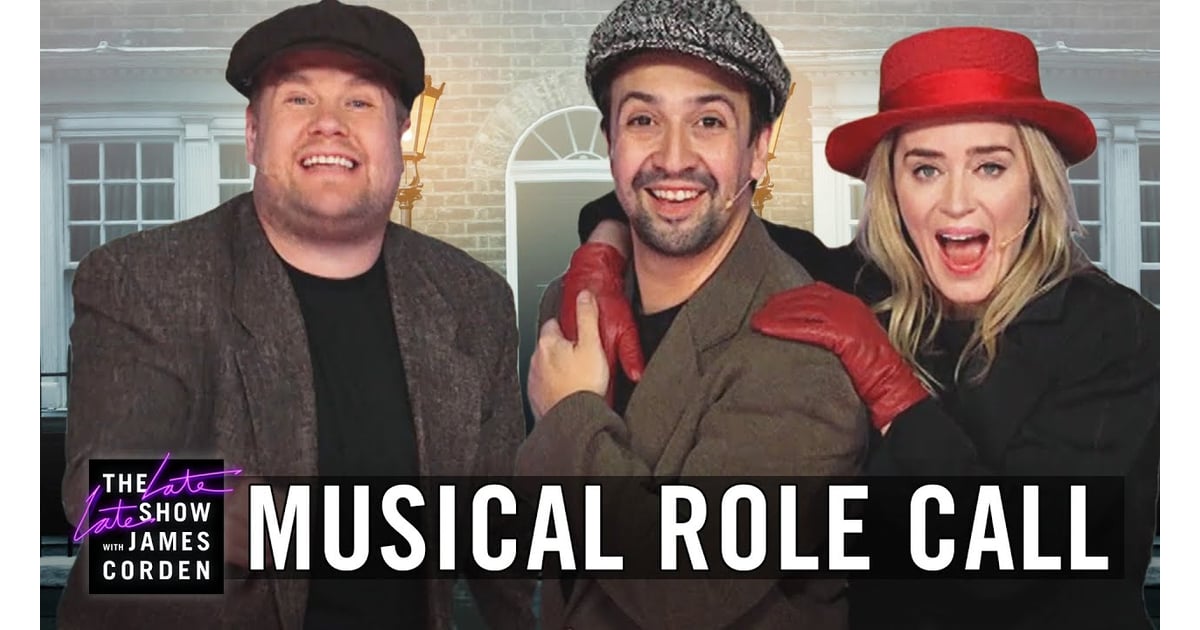
Corden and Miranda

There are four main types of characters in any story: the hero, the opponent, friends, and enemies. The most important character is the hero (or protagonist). They are the one we follow. There isn’t a story without the hero. Examples include Dorothy (Wizard of Oz), Frodo (Lord of the Rings), Luke (Star Wars), and Harry Potter.

The second important character is the opponent (antagonist, nemesis, shadow, villain). They (by definition) oppose the hero, creating obstacles. It can be a person or an intangible like fear — or both. Luke fights Darth Vader and his inner Force. Other examples are the Wicked Witch (Wizard of Oz), Sauron (LOTR), and Voldemort (Harry Potter).

Next are friends such as mentors (guides) and allies (attractors, sidekicks, fellow travelers). Heroes rarely face the world alone. Mentors and allies not only help the hero, but they also help us know the hero — after all, a man is known by the company he keeps. They add depth to our understanding of (and empathy with) the hero.

Mentors help by being available at crucial moments with information or tools to keep the hero moving forward. A hero can have several mentors. Luke is mentored by Obi-Wan Kenobi and Yoda. Other examples include Glinda (Wizard of Oz), Gandalf (LOTR), and Dumbledore (Harry Potter).

Allies help by being available at nearly any moment. Harry Potter is rarely seen without Ron and Hermione. Allies not only complement the hero’s skills, but they also give the hero a needed hug or a kick in the pants to keep them moving forward. Other examples include the Scarecrow (Wizard of Oz), Samwise (LOTR), and C-3PO (Star Wars).

Last are enemies such as gatekeepers (threshold guardian) and tricksters. “Enemies” may be a bit strong, since they don’t necessarily want to hinder the hero. Sometimes, they’re just doing their job or having some fun.

Gatekeepers appear throughout a story. They test the hero’s commitment. To move through the “gate,” past the literal or figurative roadblock, the hero has to conquer some challenge. Whatever that is, it must change the hero in some way. The gatekeeper may be a person — or a cliff. Examples include the Emerald City gatekeeper (Wizard of Oz), Gatekeeper of Bree (LOTR), Uncle Owen (Star Wars), and Uncle Vernon (Harry Potter).

Tricksters also appear throughout a story. They hinder the hero with detours, not roadblocks, and those detours must change the hero, provide needed lessons. Tricksters can provide comedy, too, like Fred and George Weasley in Harry Potter. Other examples are the Wizard (Wizard of Oz), Gollum (LOTR), and Han Solo (Star Wars).

You don’t need to use all these character types. You only need a hero and an opponent. Some characters may even serve different roles at different points. A trickster may become an ally, as Han Solo did. Before populating your story, though, get to know your hero and what makes them unique. There are five general areas to explore.

First is the physical. Don’t stop with appearance. How has the hero’s physicality affected them? Were they ignored because they’re short or bullied because they lisp? Second is the mental. What are the hero’s beliefs and, more importantly, secrets. Third is the emotional. Two important feelings are your hero’s desires (wants) and frustrations. Fourth is the behavioral. What are your hero’s habits and social life? Fifth is overall personality. Two important considerations here are the contradictions in your hero and their weaknesses.

Once you’ve done this for your hero, do it for your opponent. When you start writing dialogue, you will find different dimensions of your characters and can update these sketches, to follow where the story leads you. And as you add characters, you can create sketches of them as well, though perhaps not as detailed.

Now, watch Lauren Gunderson’s second and third workshops about character and dialogue. If you want more ideas for developing characters, try Creating Unforgettable Characters (1990) by Linda Seger. She talks about the layers of characters in her Advanced Screenwriting video series.

https://www.youtube.com/watch?v=a_TvKH-qEJk

For some musical theater inspiration, watch James Corden’s Role Call episode with Lin-Manuel Miranda and Emily Blunt and his Carpool Karaoke Broadway edition with Lin-Manuel Miranda, Audra McDonald, Jesse Tyler Ferguson, and Jane Krakowski. For more with Lin-Manuel, watch his short musical 21 Chump Street and the Hamilton “Zoom bomb” of John Krasinski’s new vlog Some Good News (which starts about 8:30 into the video).

Next, the dialogue.

Posted in Writing | Tagged , , , , , | Leave a comment

Making Musicals: The Outline

There are infinite varieties of stories, but some writers believe there are only two basic ones. The first is “Someone goes on a journey,” also called the “intentional hero.” The second is “A stranger comes to town,” also called the “accidental hero.” Of course, these are the same story told from a different “point of view.”

Journey stories are proactive stories about a search, about looking for someone or something like revenge (Othello, Sweeney Todd, Friday the 13th), love (Romeo and Juliet, Hello Dolly!, Gone with the Wind), or treasure (the throne in Macbeth, the job in A Chorus Line, the princess in Mario Brothers).

Stranger stories are reactive stories about a surprise, about discovering someone or something unusual like a person (Taming of the Shrew, Mary Poppins, A Christmas Carol), place (The Tempest, Alice in Wonderland, The Wizard of Oz), or thing (the letter in Harry Potter, the job listing in The Sound of Music, the hologram in Star Wars).

Think about which one fits your story, both its narrative and emotional centers. Whether a journey or a stranger variety, though, every story needs a defined beginning, middle, and end.

The beginning is where we learn what the hero wants — and why. You’ve already thought about this while writing the sentence for your story’s narrative center. In the “Pixar Pitch,” it is built on three prompts: “Once upon a time… and every day… until one day…” That last prompt is the point of attack, the complication that kicks the plot into motion, without which this story would never take place. It could be as simple as “Boy Meets Girl.” This is usually a small chunk of your show. You don’t want to wait too long for the action to begin.

The middle is where the hero pursues what they want but meets a series of problems (conflicts). This is the biggest chunk of your show, in fact, most of your show. It starts with the point of attack and continues with at least three more prompts: “And because of that… and because of that… until finally…” That last prompt is the climax, when the question raised by the point of attack is answered.

Playwright Lauren Gunderson refers to the series of problems as a line of dominoes, each tile directly knocking over the next one. She also recommends thinking about the “midpoint” — that is, the middle of your middle — as an event that makes it seem impossible for the hero to get what they want. “Boy Loses Girl.” Many full-length musicals have their intermission right after that midpoint crisis.

The end is where the hero gets what they want (or doesn’t). “Boy Gets Girl.” It takes your story up to “And since that day…” This is another small chunk of your show, often smaller than the beginning. It could be as simple as “They lived happily ever after.” In some shows, especially Gilbert and Sullivan’s, the end is one song: the finale.

As you build your outline, start to think a bit about where the beats of action (the scenes) might begin and end, as well as where characters might sing or dance, which is often at the end of a scene.

Before going too far, watch Gunderson’s first workshop about structure and making an outline — or her session on the basics of playwriting for teens if you’re a new writer. Also check your local library’s e-book and audiobook services for Backwards and Forwards (1983) by David Ball, which Gunderson recommends for exploring the elements of dramatic structure. If your library doesn’t have it, you might check AbeBooks and Barnes & Noble for cheap used copies or Apple Books and Audible for audio versions.

If you want to explore the Pixar process, check out The Art of Storytelling series at Pixar in a Box. If you’re still stuck on outlining your story, though, take time to watch John Yorke’s Google talk about his book Into the Woods: A Five-Act Journey into Story. (The title is a reference to fairytales not to the Sondheim and Lapine musical based on fairytales.)

Next, the cast of characters.

Posted in Writing | Tagged , , | Leave a comment